Smoke Odor Removal in East Texas
Smoke odor does not respond to surface cleaning alone. Odor compounds absorb into drywall, framing, insulation, textiles, and contents at the same depth the smoke itself reached. Cantt Restoration uses ozone treatment, thermal fogging, and hydroxyl generation to neutralize odors at the source, in both the structure and your contents. Call 24/7: (903) 251-9525.
Call 24/7: (903) 251-9525Why Does Smoke Odor Keep Coming Back After Cleaning?
After a fire, smoke odor compounds do not stay on surfaces. They penetrate into drywall paper, wood framing, insulation batts, carpet backing, and every porous material the smoke contacted. When the structure warms, those compounds off-gas back into the air. Surface cleaning with standard chemicals removes visible soot but does not neutralize the odor compounds embedded in the substrate.
This is why a structure can appear clean and still smell strongly of smoke. The odor is coming from inside the materials, not from the surface. Effective odor removal requires treatments that penetrate to the same depth the smoke did.
Odor is not cosmetic. It is a symptom. We treat the source.
Cantt Restoration — East Texas
What Odor Removal Methods Does Cantt Restoration Use?
Ozone Treatment (O3)
Ozone is a form of oxygen with three atoms instead of two. That extra atom is highly reactive and attaches to odor-causing compounds, oxidizing and neutralizing them at the molecular level. Ozone treatment is effective in enclosed spaces and on soft goods, textiles, and airspace. The structure or space must be unoccupied during ozone treatment, and ventilation is required afterward before re-entry.
Ozone is particularly effective for smoke and biological odors. It does not mask the odor with a fragrance. It neutralizes the odor-causing compound itself.
Thermal Fogging
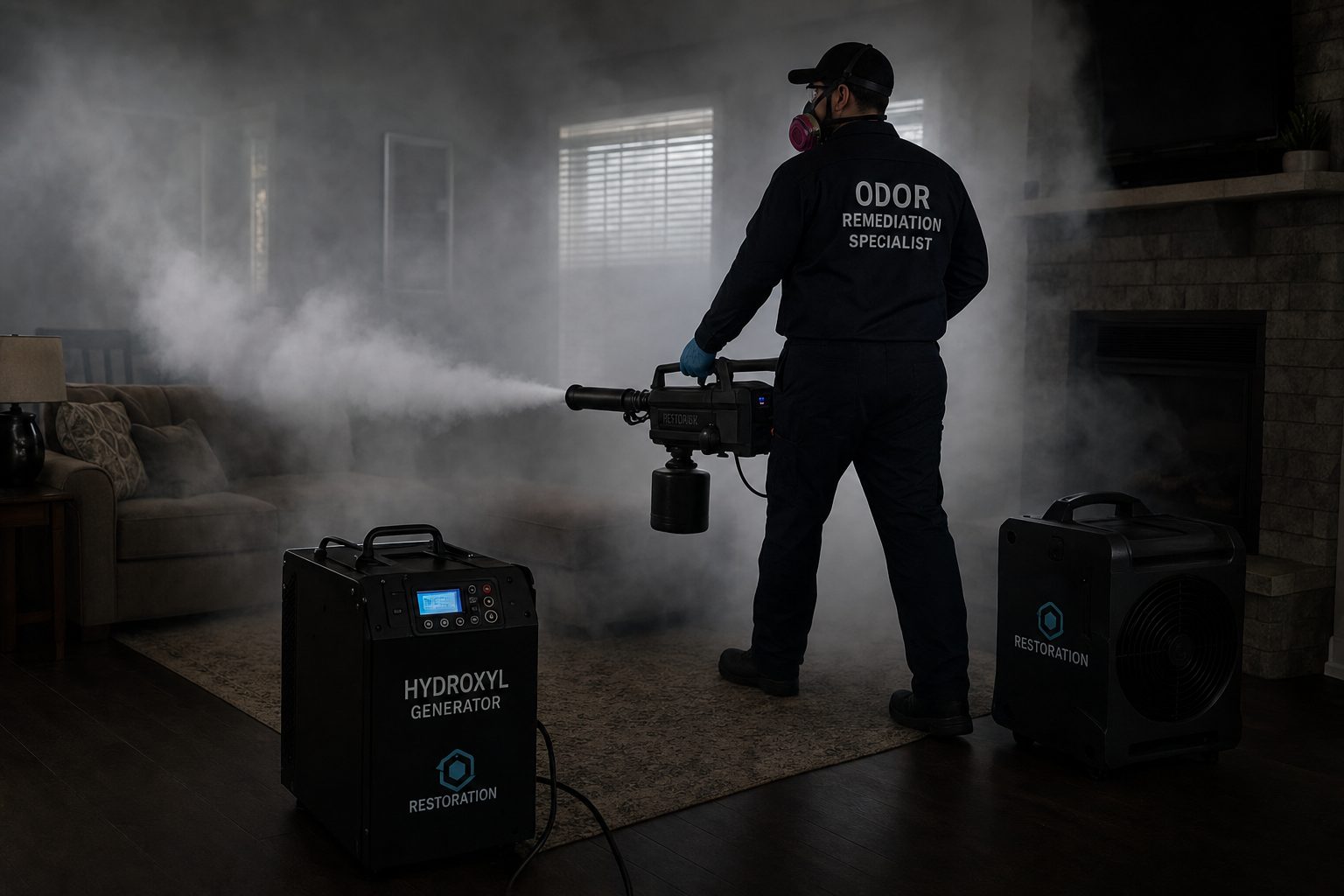
Thermal fogging uses a heated deodorizing agent that is converted into an extremely fine, dry fog. That fog penetrates porous materials in the same way smoke did, reaching the embedded odor compounds inside wood, drywall, and textiles. Thermal fogging is used on structures and on contents that have complex surfaces or porous materials where surface cleaning is not sufficient.
The combination of thermal fogging and ozone treatment covers both the material-embedded odor and the airspace, which is why both are often used on the same fire job.
Hydroxyl Generation
Hydroxyl generators produce hydroxyl radicals that neutralize odor compounds without requiring the space to be vacated during treatment. This makes hydroxyl generation appropriate for occupied spaces and for ongoing treatment during a remediation project. Hydroxyl is effective on a broad range of odor types and can be run continuously.
Structural Encapsulation
When odor compounds are embedded deeply in structural materials that cannot be removed, encapsulation with a sealing primer is an option. This is typically used on framing and subfloor in situations where the contamination is deep and the material is not being replaced. Encapsulation is documented clearly as to what was encapsulated and why.
HVAC System Deodorization
The HVAC system can distribute odor compounds to every room it serves. Duct cleaning and treatment is a component of complete odor removal on any job where the HVAC system was operating during or after the event. See our Air Duct Cleaning page for the duct-specific process.
Odor Removal and Contents Cleaning
Structural deodorization addresses the building. Contents deodorization addresses everything inside it. Smoke odor in textiles, upholstered furniture, clothing, books, and soft goods requires its own treatment protocol separate from the structural work.
Cantt Restoration treats contents odor as part of the pack-out and contents cleaning process. Ozone treatment and thermal fogging are applied to contents in a controlled setting. Items that cannot be adequately deodorized are documented. See our Contents Cleaning and Restoration page for the full contents process.
Biological and Sewage Odors
Biological odors from sewage intrusion, decomposition events, or mold require source removal before deodorization. Applying deodorizing agents over an active biological source will not produce lasting results. Once the source material has been removed and the area has been properly cleaned, structural deodorization can be effective.
For sewage-related odors, see our Sewage Cleanup page. For mold-related odors, see our Mold Remediation page. For biohazard situations, see our Biohazard Cleanup page.
Odor Removal in East Texas: Regional Context
East Texas humidity affects how odor compounds behave in structures. High ambient humidity, particularly in the spring and fall in counties like Smith, Gregg, and Harrison, can cause odor compounds to off-gas more readily from structural materials. Structures that have experienced both water and fire damage, which is not uncommon when fire suppression soaks materials, require odor treatment that accounts for elevated moisture conditions.
We assess moisture conditions as part of the odor removal process and sequence treatments to account for what the structure actually requires. We document what we find and what we do. We do not guess, and we do not assume one method works for every situation.
Frequently Asked Questions About Smoke Odor Removal
Why does smoke odor keep coming back after cleaning?
Smoke odor persists because odor-causing compounds absorb into porous materials: drywall, wood framing, insulation, textiles, and contents. Surface cleaning removes visible soot but does not neutralize compounds embedded in the substrate. Effective odor removal requires penetrating treatments like thermal fogging or ozone that reach the same depth the odor has.
What is the difference between ozone treatment and thermal fogging?
Ozone (O3) neutralizes odor compounds through oxidation and works well in enclosed spaces on textiles, soft goods, and airspace. Thermal fogging uses a heated deodorizing agent delivered as a dry fog that penetrates porous materials similarly to how smoke did. Both methods are used in combination on many fire jobs.
Can biological odors be permanently removed?
Biological odors from sewage, decomposition, or mold require source removal first. The odor-producing material must be removed or treated before deodorization. Applying odor treatment over an active biological source will not produce lasting results. Once the source is addressed, structural deodorization and contents treatment can be effective.
How long does odor treatment take?
Duration depends on the size of the space, the severity of the odor, and the method used. Ozone treatment requires the space to be unoccupied during treatment. Thermal fogging is faster but requires ventilation afterward. We assess what the space requires and provide a scope before work begins. Call us to discuss your situation.
Related Services
- Fire and Smoke Remediation — odor removal is a core component of fire remediation
- Air Duct Cleaning — HVAC systems distribute odor throughout a structure
- Contents Cleaning and Restoration — contents require separate deodorization treatment
- Mold Remediation — mold odor requires source removal before treatment
- Sewage Cleanup — biological odors require their own remediation protocol
This content is for general informational purposes only and does not constitute legal, insurance, or professional restoration advice. Cantt Restoration is not a policy expert, attorney, or public adjuster. Every loss situation is unique. For questions about your coverage, contact your insurance company, adjuster, or agent directly. For assessment of your specific situation, consult a qualified restoration professional. Cantt Restoration follows ANSI/IICRC S500, S520, and S740 standards on every job.
Send Us a Photo — No Obligation
Not sure how bad it is? Send us a photo and we will give you an honest assessment. No sales call. No pressure.
Photos of the affected area only. No need to include people, faces, or children. Avoid photos showing personal documents or ID cards. One or two clear photos is plenty. Photos submitted through this form are used solely to assess your situation and are not shared, sold, or published without your written consent.
Odor That Keeps Coming Back Needs More Than Surface Cleaning
Call 24/7. We identify the source, treat it properly, and document the results in East Texas.
(903) 251-9525 — 24/7 Emergency Line