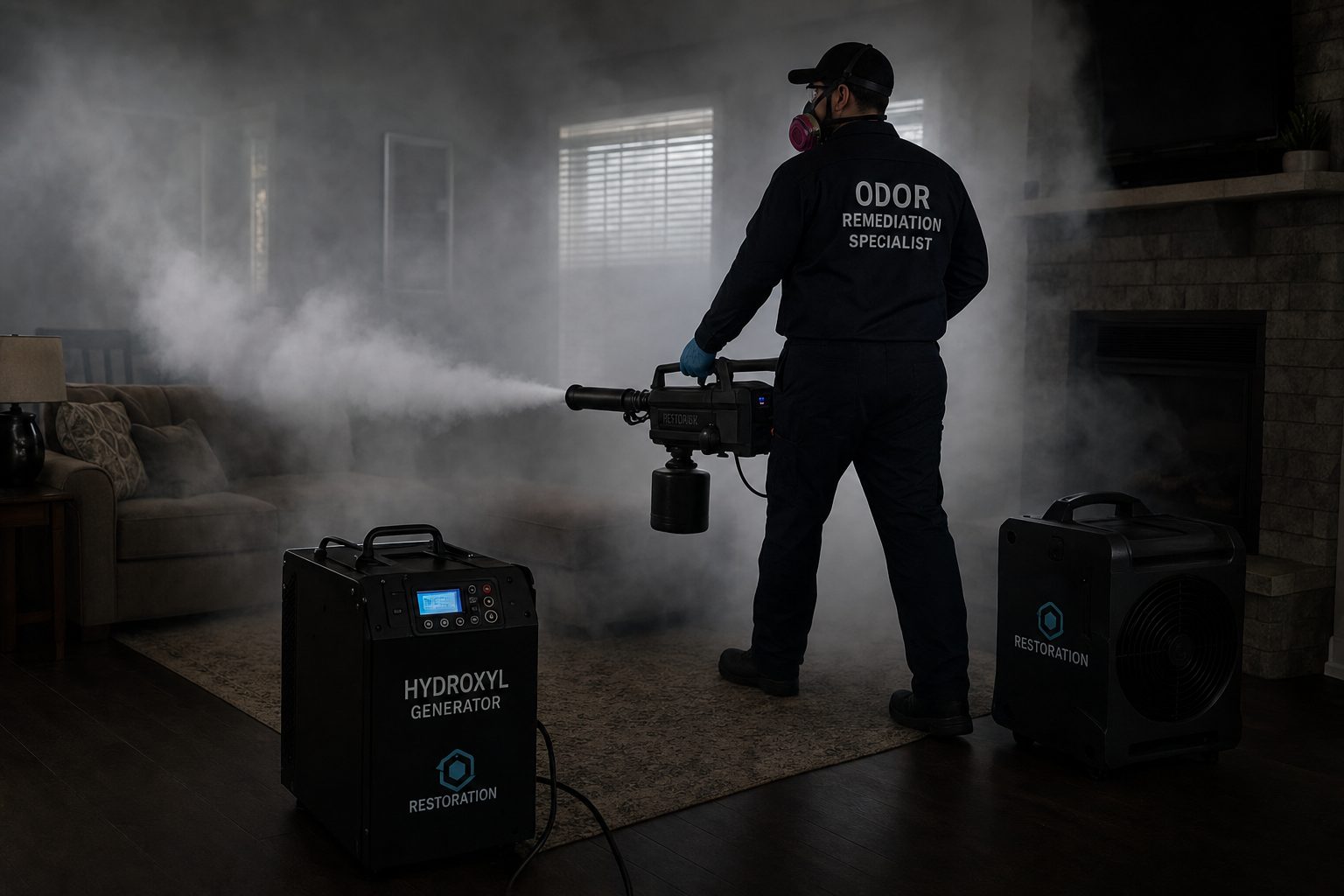
A musty smell after water damage in your East Texas home is not a cosmetic inconvenience. It is an active signal that the moisture or biological problem behind it has not been fully resolved. If you smell it, the source is still there.
What Causes a Musty Smell After Water Damage?
The odor comes from microbial volatile organic compounds, commonly called mVOCs. These are chemical compounds released by mold (what restoration professionals classify as microbial growth) and mildew as they consume organic materials in wall cavities, flooring assemblies, and structural framing. If you can smell them, the source is biologically active.
The most common reasons a musty smell persists or returns after a water damage event:
- Active mold growth in a hidden location that was not reached during restoration
- Structural drying that did not reach ANSI/IICRC S500 standard moisture content levels
- Contaminated HVAC ductwork distributing mVOCs throughout the home
- Contents that absorbed moisture and were not professionally treated
Does a Musty Smell Mean There Is Still Mold Growing Somewhere?
Not always mold, but always something. A musty odor following a water event means active biological activity from a moisture source that has not been fully eliminated. Restoration work that addressed the visible damage may have missed the source if moisture readings were not taken at every relevant location and confirmed at target levels.
Why Does Addressing the Smell Without Finding the Source Fail?
Air fresheners, ozone generators, and deodorizers address the symptom, not the cause. The mVOC signal will return as long as the biological source is active. The only lasting solution is to identify and eliminate the moisture condition, remediate any microbial growth through licensed mold remediation procedures, and confirm drying to standard levels throughout all affected materials.
We investigate the source first. We document what is actually there. Not more. Not less.
How Does Cantt Restoration Find a Hidden Moisture Source?
We use a combination of:
- FLIR thermal imaging to locate hidden temperature differentials that indicate moisture behind walls and above ceilings
- Extech MO290-RK moisture meters to quantify moisture content at specific structural locations
- Matterport 3D documentation to capture the complete picture of where readings were taken and what they showed
If a previous remediation or drying effort missed something, these instruments find it.
An East Texas Scenario: Brownsboro After a Pipe Repair
A homeowner in Brownsboro had a washing machine supply line fail. A plumber repaired the line. A restoration company came in, ran equipment for a week, and issued a completion report. Three weeks later, the laundry room had a persistent musty odor.
Cantt Restoration was called for a second assessment. Thermal imaging revealed moisture still present inside the wall cavity behind the washing machine alcove, which had not been adequately addressed by the original drying setup. The wall cavity was opened, properly dried, and treated. The odor resolved and did not return.
Sometimes the damage is minimal and you might not need us. We will tell you that too.
Call Cantt Restoration 24/7: (903) 251-9525
Do what you safely can to limit further damage while you wait. If you do not feel safe, do not go back in. Call us first and we will walk you through it.
This content is for general informational purposes only and does not constitute legal, insurance, or professional restoration advice. Cantt Restoration is not a policy expert, attorney, or public adjuster. Every loss situation is unique. For questions about your coverage, contact your insurance company, adjuster, or agent directly. For assessment of your specific situation, consult a qualified restoration professional. Cantt Restoration follows ANSI/IICRC S500, S520, and S740 standards on every job.
Frequently Asked Questions
What causes a musty smell after water damage in an East Texas home?
Musty odor after water damage is caused by microbial volatile organic compounds (mVOCs) released by active mold or mildew growing on wet organic materials. If the smell is present, the source is biologically active. The moisture condition that supports it has not been fully resolved.
Can I mask a musty odor with air fresheners or ozone after water damage?
Masking odor without finding the source creates a temporary result. The mVOC signal returns as long as the biological source is active and wet. The only lasting resolution is identifying and eliminating the moisture condition, remediating the biological growth, and confirming standard drying levels throughout all affected materials.
Does a musty smell after restoration mean the job was not done correctly?
It means the moisture source may not have been fully addressed. This can happen when moisture readings were not taken in all relevant locations, when wall cavities were not opened for drying, or when the source moisture was not eliminated before equipment was removed. A second professional assessment is warranted.
Can HVAC systems spread musty odor through an East Texas home?
Yes. HVAC ductwork and coil components that were not cleaned after a water or mold event can circulate mVOCs with every system cycle, distributing the odor from a localized source throughout the entire home. HVAC assessment should be part of any odor investigation after a water event.
How does Cantt Restoration find a hidden moisture source causing a musty smell?
We use FLIR thermal imaging to locate hidden moisture differentials behind walls and above ceilings, calibrated moisture meters to quantify moisture content at specific locations, and Matterport 3D documentation to capture the complete picture. We re-assess the full structure, not just the previously known loss zone.