Asbestos
Abatement.
When asbestos-containing materials are found, we stop and test. Pre-abatement and post-abatement, through independent third-party laboratories. Licensed contractors. One point of contact throughout.
What We Do
Asbestos Abatement Coordination in East Texas
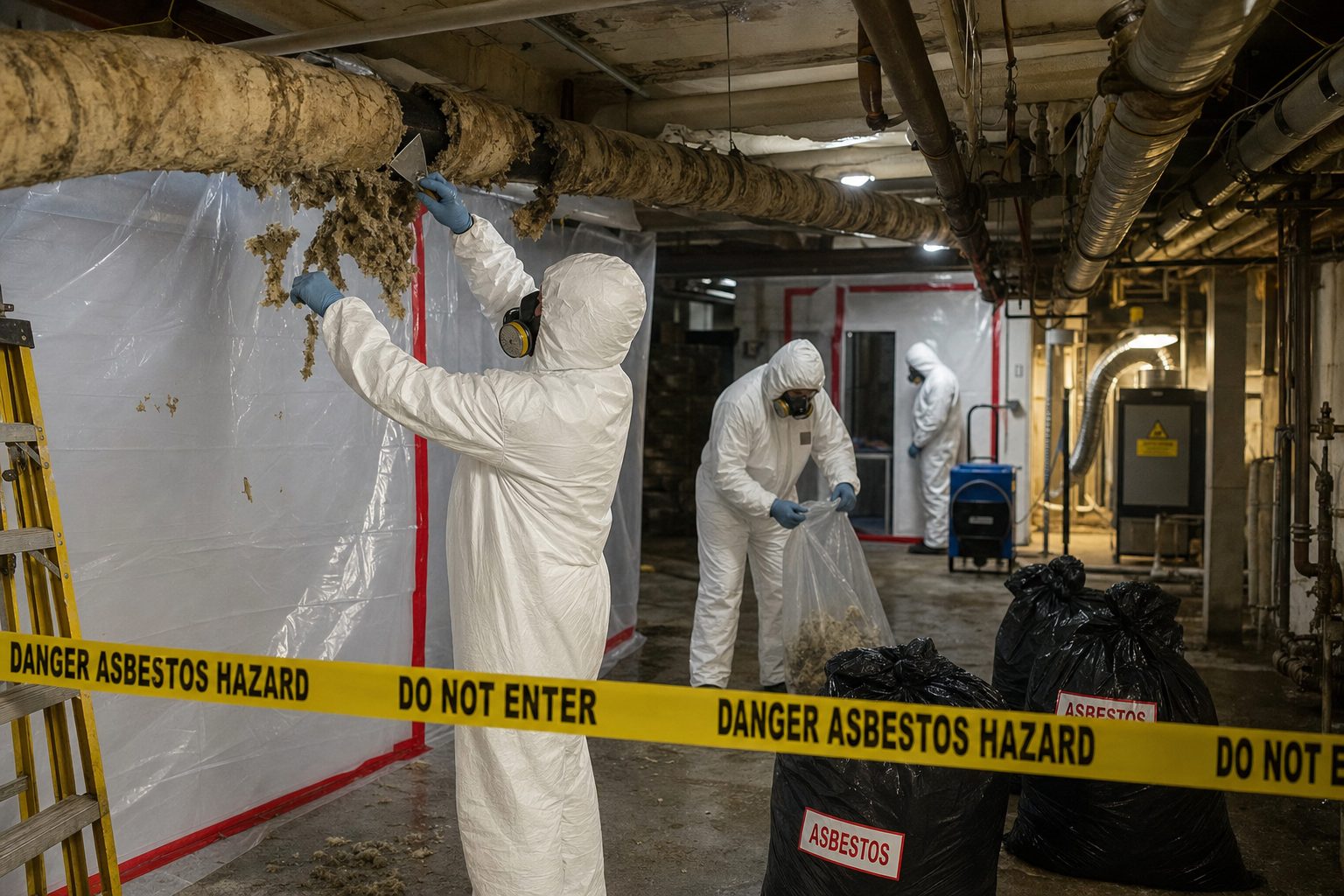
When asbestos-containing materials (ACM) are discovered or suspected during restoration work, Cantt Restoration stops work and coordinates testing and abatement through licensed, state-certified contractors. You have one point of contact from initial assessment through post-abatement clearance. We do not perform abatement ourselves: licensed subcontractors handle all ACM work.
Suspected ACM Identification
During restoration work, if materials suspected to contain asbestos are discovered, we stop work in the affected area immediately and coordinate bulk sampling for laboratory analysis.
Pre-Abatement Testing
We coordinate bulk sampling through an independent third-party laboratory before any abatement work begins. Testing is independent: we use labs with no financial interest in the outcome.
Licensed Contractor Management
We source and coordinate licensed, state-certified asbestos abatement contractors for all ACM removal work. You do not manage multiple contractors in a health hazard situation. We manage that for you.
Regulatory Compliance Oversight
Asbestos abatement is regulated by EPA NESHAP regulations, OSHA standards, and Texas DSHS requirements. We coordinate compliance documentation throughout the process.
Post-Abatement Clearance Testing
After abatement is complete, we coordinate independent post-abatement air clearance testing through the same independent third-party laboratory. Clearance must be achieved before the space is re-occupied or restoration work resumes.
Integration with Restoration Timeline
Asbestos abatement is coordinated as part of the overall restoration timeline. We sequence abatement and restoration work to minimize project duration while maintaining all required protocols.
When there is any question, we stop and test. The homeowner deserves certainty.
Cantt Restoration — East Texas
Understanding Asbestos Risk
What Homes in East Texas Are Likely to Contain Asbestos?
Homes built before 1980 are the most likely to contain asbestos-containing materials (ACM). East Texas has a significant housing stock from this era, particularly in older neighborhoods in Tyler, Longview, Marshall, and Jacksonville. Common locations for ACM include floor tiles and associated adhesive mastic, pipe insulation, textured ceiling coatings, attic insulation, and roofing materials.
ACM that is in good condition and undisturbed does not always present an immediate hazard. The risk arises when ACM is disturbed through drilling, cutting, demolition, or renovation activity, releasing fibers into the air. During any water damage or fire restoration project in a pre-1980 structure, ACM must be assessed before demolition begins.
Send Us a Photo — No Obligation
Not sure how bad it is? Send us a photo and we will give you an honest assessment. No sales call. No pressure.
Photos of the affected area only. No need to include people, faces, or children. Avoid photos showing personal documents or ID cards. One or two clear photos is plenty. Photos submitted through this form are used solely to assess your situation and are not shared, sold, or published without your written consent.
Questions
Asbestos Abatement: Frequently Asked Questions
Does Cantt Restoration perform asbestos abatement directly?
No. Cantt Restoration coordinates asbestos abatement through licensed, state-certified abatement contractors. We manage the assessment, scheduling, documentation, and post-abatement verification. You have one point of contact throughout the process.
What homes in East Texas are likely to have asbestos?
Homes built before 1980 are the most likely to contain ACM. Common locations include floor tiles and mastic, pipe insulation, textured ceiling coatings, attic insulation, and roofing materials. Any suspected ACM should be tested before disturbance.
What happens if asbestos is found during water or fire damage restoration?
We stop work in the affected area immediately. We coordinate pre-abatement testing through an independent third-party laboratory. If ACM is confirmed, we coordinate licensed abatement before restoration work in that area resumes. Post-abatement clearance testing is required before the space is re-occupied or work continues.
This content is for general informational purposes only and does not constitute legal, insurance, or professional restoration advice. Cantt Restoration is not a policy expert, attorney, or public adjuster. Every loss situation is unique. For questions about your coverage, contact your insurance company, adjuster, or agent directly. For assessment of your specific situation, consult a qualified restoration professional. Cantt Restoration follows ANSI/IICRC S500, S520, and S740 standards on every job.
Found Suspected Asbestos?
Stop work. Call us. We coordinate testing and licensed abatement so you do not have to manage multiple contractors in a health hazard situation.
(903) 251-9525