Sewage Backup
Cleanup.
Sewage backup is a Category 3 water event under ANSI/IICRC S500. Pathogenic biological contamination requires professional decontamination, licensed waste disposal, and structural drying. We respond 24/7 across East Texas.
What We Do
Sewage Backup Cleanup in East Texas
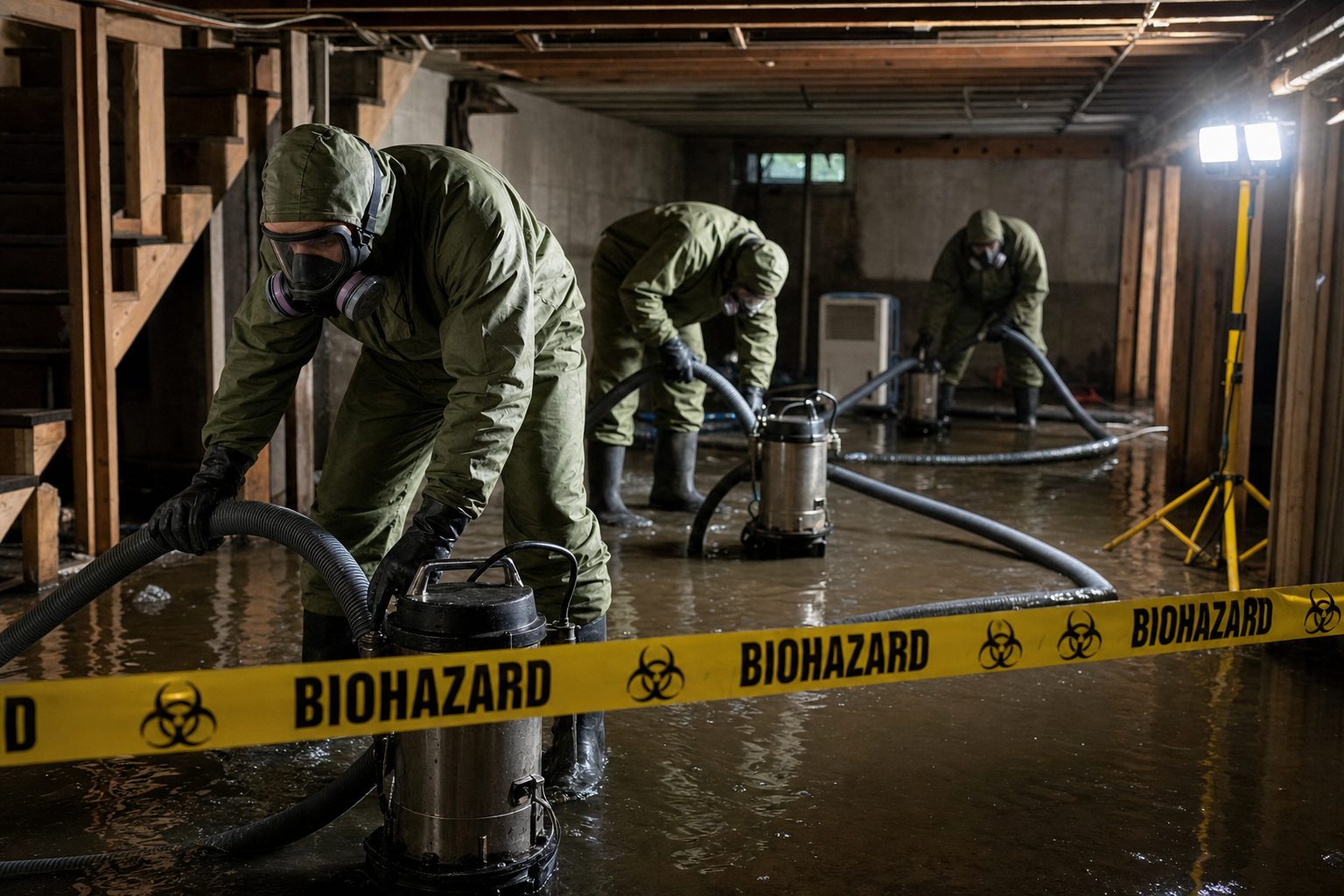
Sewage backup is a Category 3 water event under ANSI/IICRC S500, meaning the water contains pathogenic biological contamination that presents health risks to occupants. Cantt Restoration responds 24/7 with the equipment, PPE, and licensed disposal protocols required for Category 3 water intrusion in East Texas.
Category 3 Water Extraction
We extract sewage-contaminated water using dedicated equipment maintained separately from clean-water equipment, following Category 3 protocols throughout.
Decontamination
All affected surfaces, structural materials, and contents are decontaminated using appropriate antimicrobial agents. Porous materials that cannot be decontaminated are removed and disposed of through licensed waste disposal channels.
Structural Drying
After decontamination, we apply ANSI/IICRC S500 structural drying protocols. Category 3 losses require more extensive drying documentation due to the contamination protocols involved.
Moisture Mapping and Monitoring
We use FLIR thermal imaging and the Extech MO290-RK contractor kit to map saturation extent and monitor daily drying progress through calibrated readings.
Contents Evaluation
Sewage-contaminated contents require individual assessment. Porous materials that cannot be successfully decontaminated must be disposed of. Salvageable items are processed through our contents restoration program.
Odor Remediation
Sewage losses require aggressive odor neutralization beyond standard drying. We deploy ozone treatment and other deodorization protocols as part of the Category 3 remediation process. See our odor removal page.
Category 3 water is a hazmat situation. We treat it like one.
Cantt Restoration — East Texas
Immediate Steps
What To Do Immediately After a Sewage Backup
Leave the affected area immediately and restrict access. Do not use any drains or toilets in the building until the backup is cleared. Keep children and pets out of the affected area. Do not attempt to extract sewage water with household equipment. Call Cantt Restoration at (903) 251-9525. We respond 24/7.
In a Troup-area home we responded to, the homeowner had attempted to clean the basement sewage backup with a shop vac before calling us. The shop vac had spread contaminated water aerosols throughout the basement space, creating a secondary contamination area that required additional remediation beyond the original backup footprint. Call us first.
Send Us a Photo — No Obligation
Not sure how bad it is? Send us a photo and we will give you an honest assessment. No sales call. No pressure.
Photos of the affected area only. No need to include people, faces, or children. Avoid photos showing personal documents or ID cards. One or two clear photos is plenty. Photos submitted through this form are used solely to assess your situation and are not shared, sold, or published without your written consent.
Questions
Sewage Backup Cleanup: Frequently Asked Questions
Is sewage backup a health hazard?
Yes. Sewage backup is Category 3 water under ANSI/IICRC S500, containing pathogenic bacteria, viruses, and biological hazards. The affected area must be treated as a biohazard until professional decontamination is complete. Do not allow children or pets to enter the affected area.
What should I do immediately after a sewage backup?
Leave the affected area and restrict access. Do not use any drains or toilets in the building. Call Cantt Restoration at (903) 251-9525. We respond 24/7 with Category 3 extraction equipment, PPE, and licensed waste disposal.
Does sewage backup cause mold?
Yes, if not mitigated quickly. Category 3 water events present both immediate biological hazard and secondary mold risk if structural materials are not extracted, decontaminated, and dried to ANSI/IICRC S500 standards within the appropriate timeframe. Our mold remediation services are available as a follow-on service. See our mold remediation page.
This content is for general informational purposes only and does not constitute legal, insurance, or professional restoration advice. Cantt Restoration is not a policy expert, attorney, or public adjuster. Every loss situation is unique. For questions about your coverage, contact your insurance company, adjuster, or agent directly. For assessment of your specific situation, consult a qualified restoration professional. Cantt Restoration follows ANSI/IICRC S500, S520, and S740 standards on every job.
Sewage Backup Requires Immediate Response.
Available 24 hours a day, 7 days a week. Category 3 protocols on every job.
(903) 251-9525