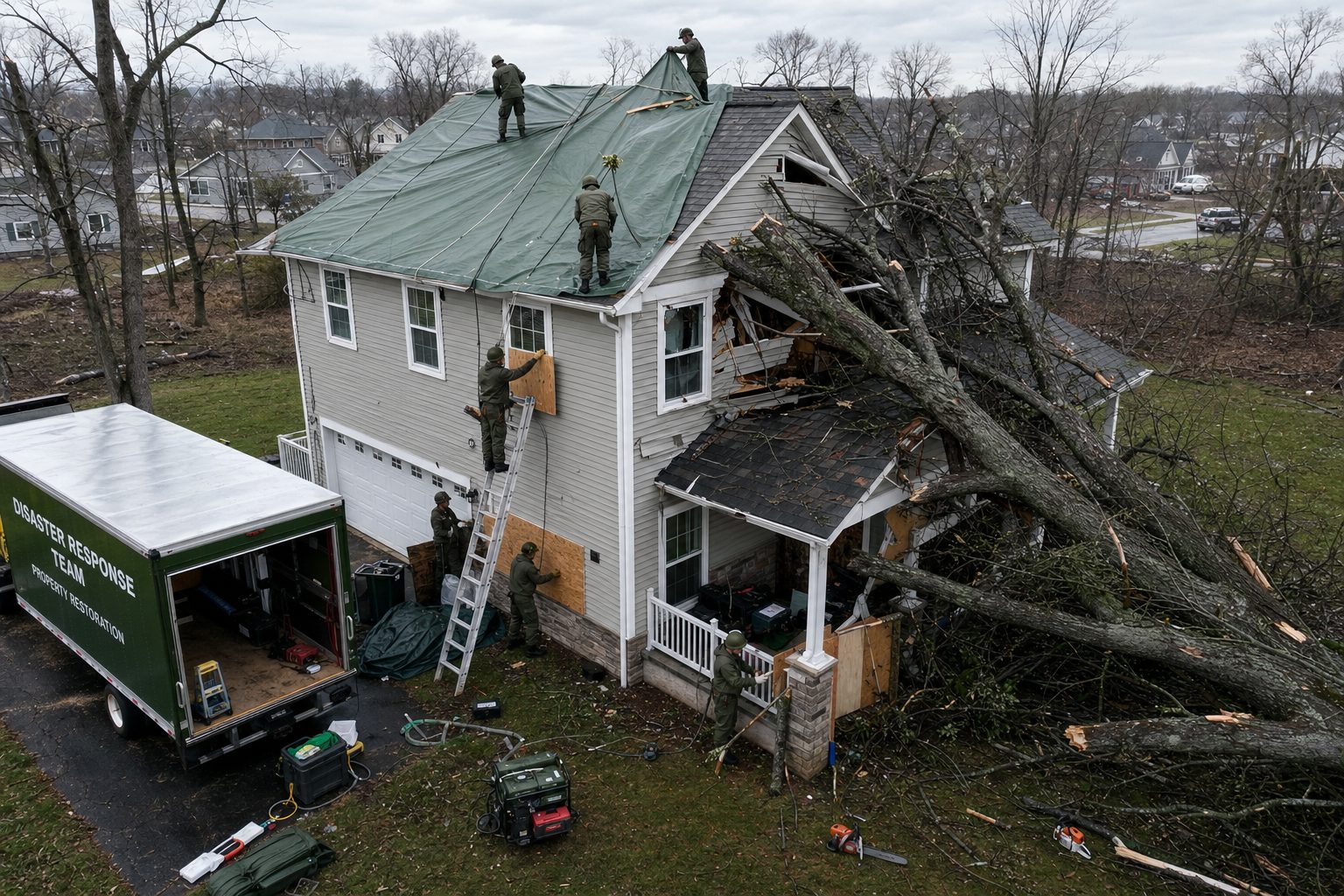
Storm damage and flooding are not the same problem, even when they happen in the same storm. Storm damage means water entered through a breach in your structure from above. Flooding means water rose from the ground up. The source changes the water category, the remediation approach, and the urgency of specific steps , understanding which you have helps you respond correctly.
What Is the Difference Between Storm Damage and Flooding?
After a major rain event in East Texas, two types of water damage frequently occur at the same time: storm damage from wind, hail, and direct precipitation entering through compromised structural elements, and flooding from rising water, overwhelmed drainage, and runoff accumulation. Both require professional restoration. They are not the same event.
The single most important distinction is where the water came from.
Storm Damage: Water That Enters From Above
Storm damage involves precipitation entering your home through compromised structural elements. A hail-damaged roof. A blown-in window. Siding failure from high winds. The water source is rain or ice, and it typically:
- Enters at specific, identifiable breach points
- Saturates zones directly below the breach in a traceable pattern
- Starts as Category 1 water (clean precipitation), though it picks up contaminants from insulation, attic dust, and debris as it travels downward
- Has a defined entry path that can be stopped by repairing or tarping the breach
Storm damage is localized. The entry point can usually be identified, the damage path can be traced, and once the breach is sealed, new water stops entering. The focus shifts to drying what is already wet.
Flooding: Water That Rises From Ground Level
Flooding involves water rising from below, through foundation perimeters, drainage system overwhelm, surface water accumulation, and in severe events from rivers and streams overflowing. Flood water behaves very differently:
- Enters from multiple directions simultaneously, at and below grade
- Is Category 3 (black water) from the moment it contacts the soil and the drainage system
- Affects the lowest elevation of the structure first and most severely
- Cannot be stopped by structural repairs (the water must recede on its own)
Category 3 designation is not a technicality. It means the water carries pathogens, chemicals, sewage overflow from overwhelmed municipal systems, agricultural runoff, and anything else present in the soil and drainage at that moment. All porous materials that contact Category 3 water must be treated accordingly, which means most must be removed.
Why Does East Texas Spring Weather Create Both Simultaneously?
Spring in East Texas brings a combination of conditions that frequently produces concurrent storm damage and flooding in the same event. A severe thunderstorm with high winds and large hail can damage a roof, breaking the structural envelope, at the same moment that heavy rainfall is overwhelming drainage systems and raising ground water levels around the foundation.
A home experiencing both at once has two distinct water problems requiring two different response protocols. The storm breach above creates a Category 1 to 2 water intrusion into the upper story. The flooding below creates a Category 3 intrusion into the crawl space, lowest floor, and perimeter areas.
These are not the same problem. They require separate assessment, separate documentation, and separate protocols.
An East Texas Story: Kaufman County, April Storm
A homeowner in Kaufman County called Cantt Restoration after a severe April storm left standing water on their first floor and visible damage to the roof above the master bedroom. When we arrived, the situation was exactly what the description suggested: two simultaneous events.
FLIR thermal imaging confirmed moisture in the second-floor ceiling assembly consistent with a roof breach and downward water travel. Moisture readings with the Extech MO290-RK on the first floor showed saturation at the perimeter consistent with ground-level intrusion.
Matterport documentation captured the full scope of both damage zones before any work began. We documented the two water categories separately, addressed each with its appropriate protocol, and confirmed the full extent of each with daily moisture monitoring using Dri-Eaz equipment throughout the drying period.
One call. Two events. Both fully addressed.
What Standards Apply to Flood and Storm Water Damage?
All water damage response at Cantt Restoration follows ANSI/IICRC S500 (Professional Water Damage Restoration) standards, which define water categories, remediation protocols, and documentation requirements. Category 3 flood water requires the most aggressive response protocol, including removal of all affected porous materials.
Call Cantt Restoration 24/7: (903) 251-9525
Sometimes the damage is minimal and you might not need us. We will tell you that too.
This content is for general informational purposes only and does not constitute legal, insurance, or professional restoration advice. Cantt Restoration is not a policy expert, attorney, or public adjuster. Every loss situation is unique. For questions about your coverage, contact your insurance company, adjuster, or agent directly. For assessment of your specific situation, consult a qualified restoration professional. Cantt Restoration follows ANSI/IICRC S500, S520, and S740 standards on every job.
Frequently Asked Questions
What is the difference between storm damage and flooding from a restoration standpoint?
Storm damage involves water entering through a compromised structural element (damaged roof, broken window) from above, starting as Category 1 or 2 water. Flooding involves water rising from ground level, which is Category 3 from the moment it contacts soil and drainage systems. They have different contamination levels, different remediation protocols, and require separate assessment and documentation even when they occur in the same storm event.
Is floodwater more dangerous than storm water that enters through a roof?
Yes. Floodwater from ground level is Category 3 (black water) because it has contacted soil, street drainage, and potentially sewage overflow. It carries pathogens and contaminants that require full hazard protocols for all porous materials. Storm water entering through a roof breach is typically Category 1 (precipitation), though it may degrade to Category 2 as it contacts building materials.
Can a home have storm damage and flooding at the same time?
Yes, and this happens regularly in East Texas during spring severe weather. Hail or wind can damage a roof at the same time that heavy rainfall overwhelms drainage systems and raises ground water levels. When both occur simultaneously, the home has two distinct water damage events with different water categories, different entry points, and different restoration protocols.
What does Category 3 water mean for my home?
Category 3 water (also called black water) is grossly contaminated water from ground flooding, sewage backup, or other sources carrying pathogens and chemicals. When Category 3 water contacts porous materials (drywall, insulation, wood framing, flooring, soft contents), industry standards require those materials to be removed rather than dried in place. Category 3 contact changes the remediation approach fundamentally.
How does Cantt Restoration assess a property with both storm damage and flooding?
We assess both events separately. Thermal imaging maps the moisture pattern for each, moisture readings document material saturation in each zone, and Matterport 3D scanning documents the full scope of both damage areas before work begins. Documentation for each water category is kept separate because the remediation approach and protocols are different for each.