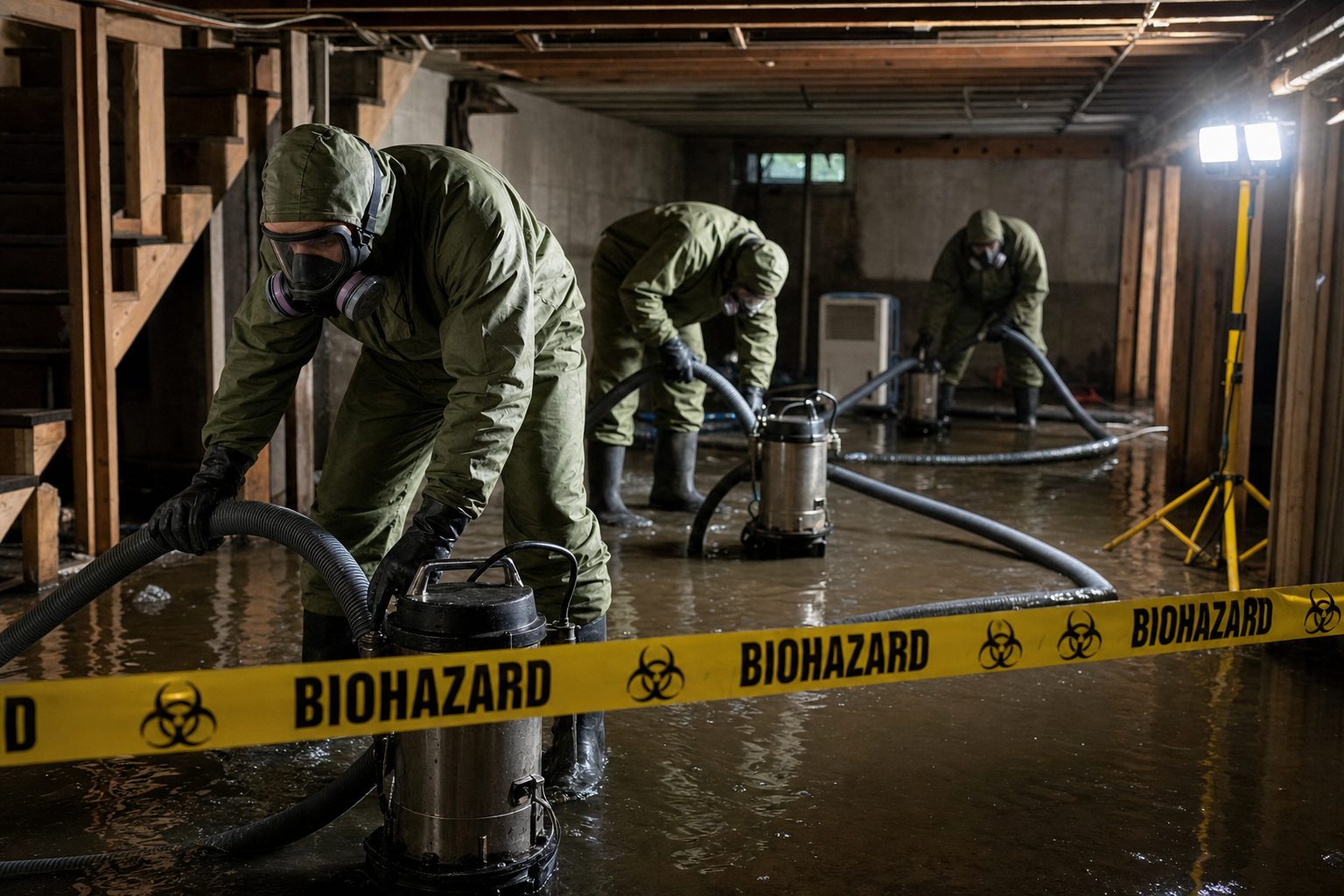
Sewage backup is not a standard water damage event. It is a Category 3 biohazard that carries bacteria, viruses, parasites, and other pathogens capable of causing serious illness. The appropriate response is not extraction and drying. It is extraction, decontamination, disposal of porous materials that cannot be decontaminated, and full biohazard cleanup with appropriate personal protective equipment throughout.
What Makes Sewage Backup a Category 3 Event?
The ANSI/IICRC S500 standard categorizes water damage by the level of contamination:
- Category 1: Clean water from supply lines or rain. Low contamination risk.
- Category 2: Gray water with some contamination from appliances, overflow from dishwashers or washing machines. Moderate contamination.
- Category 3: Black water, including sewage backup, rising floodwater, and any water that has contacted sewage systems. High pathogen content. Requires full biohazard protocols.
Sewage backup, whether from a blocked main line, a failed lift station, or municipal sewer overflow, is always Category 3. The specific pathogens present vary, but the response protocol does not: full protective equipment, no porous material contact without decontamination consideration, and complete documentation before any material is moved.
Why Can Porous Materials Not Be Cleaned After Sewage Contact?
Porous materials, including drywall, insulation, carpet, and wood flooring, absorb sewage and cannot be fully decontaminated. The pathogen load penetrates into the material at a level that surface cleaning cannot reach. Industry standards require removal and disposal of porous materials that have had Category 3 water contact beyond a defined period.
This is not a conservative recommendation. It is the industry standard for protecting occupant health in the restored space.
An East Texas Story: A Whitehouse Home and a Blocked Main Line
A Whitehouse homeowner returned home to find the first-floor bathrooms had backed up, with sewage overflow reaching the hallway carpet and into the adjacent utility room. A tree root intrusion into the main sewer line had caused the blockage.
Cantt Restoration responded with full Category 3 protocols: team members in full personal protective equipment, extraction of sewage water from all affected areas, removal and bagged disposal of all affected carpet, pad, and baseboard, removal of drywall in the utility room to the 12-inch flood cut line, HEPA vacuuming of all surfaces, application of EPA-registered antimicrobial agent to all affected structural surfaces, and commercial drying of the structural framing before any restoration work began.
The homeowner asked about cleaning the carpet rather than discarding it. We explained that carpet that has absorbed Category 3 water cannot be safely cleaned to the standard required for residential use. We document what is actually there. Not more. Not less.
What Does Professional Sewage Cleanup Involve?
- Source identification and stoppage: The sewage source must be stopped before cleanup. We coordinate with plumbers to address the blockage.
- Category 3 extraction: Sewage-contaminated water is extracted with appropriate equipment and disposed of through licensed waste disposal.
- Porous material removal: Carpet, pad, baseboard, and affected drywall are removed and bagged for disposal per biohazard protocols.
- Surface decontamination: All non-porous structural surfaces are cleaned and treated with EPA-registered antimicrobial agents.
- HEPA vacuuming: HEPA vacuum equipment removes contaminated particulates from all surfaces.
- Structural drying: Commercial drying equipment brings the structure to target moisture levels per ANSI/IICRC S500.
Call Cantt Restoration 24/7
(903) 251-9525Sometimes the damage is minimal and you might not need us. We will tell you that too.
Send Us a Photo for a Free Assessment
Not sure how bad the damage is? Send a photo and we will give you an honest assessment. No sales pitch. No pressure.
Send a Photo- One or two clear photos of the affected area is plenty
- No need to include people, faces, or personal documents
- Photos of walls, floors, ceilings, or contents are most useful
Photos submitted are used solely to assess your situation. They are not shared, sold, or published without your written consent. You may also email photos directly to contact@canttrestoration.com.
Cantt Restoration serves all of East Texas , Smith County, Cherokee County, Wood County, Gregg County, and beyond. Based in Arp, TX. Call (903) 251-9525.
This content is for general informational purposes only and does not constitute legal, insurance, or professional restoration advice. Cantt Restoration is not a policy expert, attorney, or public adjuster. Every loss situation is unique. For questions about your coverage, contact your insurance company, adjuster, or agent directly. For assessment of your specific situation, consult a qualified restoration professional. Cantt Restoration follows ANSI/IICRC S500, S520, and S740 standards on every job.
Frequently Asked Questions
Is sewage backup a health hazard?
Yes. Sewage water (Category 3) contains bacteria, viruses, parasites, and other pathogens capable of causing serious illness. Direct contact should be avoided. Affected areas should be vacated and professional remediation with appropriate protective equipment should be the only response.
Can carpet be saved after sewage backup?
No. Carpet and carpet pad that have absorbed Category 3 water cannot be decontaminated to the standard required for safe residential use. They must be removed, bagged, and disposed of per biohazard protocols. This applies to all porous materials with sustained Category 3 water contact.
What causes sewage backup in East Texas homes?
Common causes include tree root intrusion into sewer lines, which is particularly common in East Texas due to large root systems, blockages from grease buildup or foreign objects, municipal sewer system overflows during heavy rain events, and failed or overloaded septic systems.
How long does sewage cleanup take?
Sewage cleanup, including extraction, porous material removal, decontamination, and structural drying, typically takes three to five days for an average residential event. Larger losses or significant structural involvement take longer. Timeline is determined by the actual scope of the event and drying verification readings.
Do I need to leave my home during sewage cleanup?
Depending on the extent of the event and the area affected, temporary relocation may be appropriate during the active cleanup phase. We assess the situation on arrival and provide honest guidance. Occupying a space with active Category 3 contamination or during decontamination procedures is not recommended.