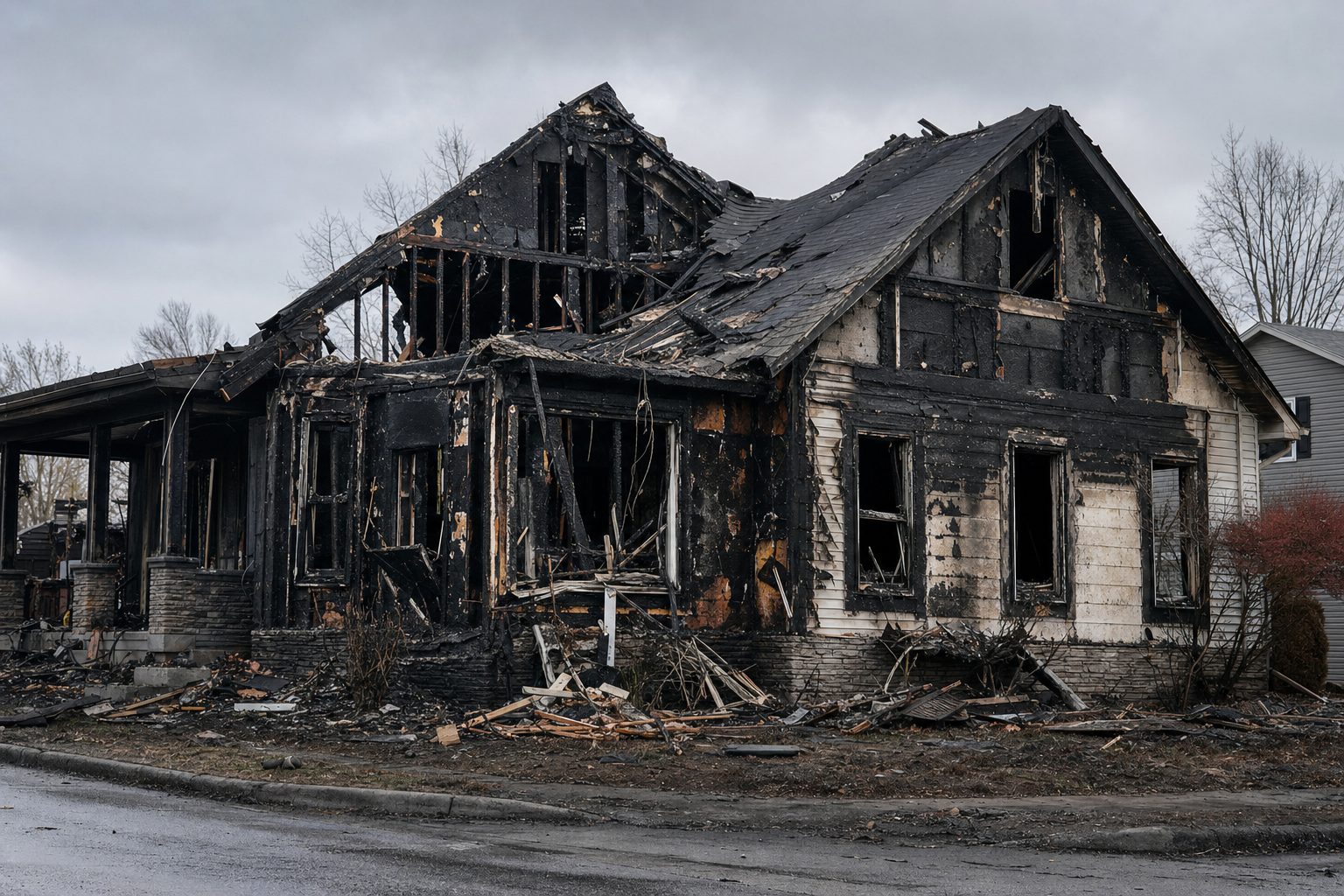
Smoke odor after a house fire is not just an unpleasant smell. It is the physical presence of chemical compounds embedded in the porous materials throughout the home. Ventilation does not eliminate it. Air fresheners mask it temporarily. Professional odor elimination treats the source at the molecular level, and it requires the right sequence of techniques applied to the right materials.
Why Does Smoke Odor Persist After a Fire Is Extinguished?
Smoke is a complex mixture of gases, particulates, and chemical compounds produced by the combustion of building materials, furnishings, and contents. During a fire, these compounds penetrate porous materials at a molecular level: into wood grain, drywall gypsum, carpet fibers, upholstery foam, and every other soft surface in the structure.
The compounds do not stay on the surface. They migrate into the material itself. The outer layer of a wall may be cleaned while the compound remains locked inside the gypsum. The fabric surface of upholstery may be wiped while the odor molecule sits inside the foam core. Surface-level cleaning addresses the surface. It does not address what is inside.
What Are the Different Types of Smoke Odor?
Fire produces different types of soot and odor compounds depending on what burned:
- Dry smoke: Produced by fast-burning, high-temperature fires. Powdery, easier to clean from surfaces but still penetrates porous materials.
- Wet smoke: Produced by slow-burning, low-temperature fires or smoldering materials. Sticky, dense, and significantly more difficult to clean. Strong, persistent odor.
- Protein smoke: Produced by kitchen fires involving cooking oils or organic material. Nearly invisible residue, extremely persistent odor that requires specific chemistry to address.
The cleaning approach must match the soot type. A single approach does not work for all smoke types.
What Professional Smoke Odor Elimination Involves
Thermal fogging: A petroleum-based deodorizing compound is heated into a dense fog that penetrates the same porous materials smoke penetrated. The fog physically bonds with and neutralizes odor compounds inside the material. This is not a masking agent.
Ozone treatment: Ozone (O3) oxidizes odor compounds at a molecular level. It reaches embedded odors inside materials that surface cleaning cannot reach. Ozone treatment requires evacuation of the structure and all living things during treatment.
Hydroxyl treatment: For situations where occupant presence is required, hydroxyl generators provide odor neutralization without requiring full evacuation.
An East Texas Story: A Golden Home and a Kitchen Fire
A Golden homeowner had a kitchen fire involving cooking oil that was extinguished quickly. The fire damage was limited to the range area, but a protein smoke odor permeated the entire open-plan living and kitchen area within hours and remained strong three days after the fire.
Protein smoke produces a nearly invisible residue that infiltrates soft surfaces without visible evidence. Cantt Restoration treated the affected surfaces with chemistry specific to protein soot, performed ozone treatment of the full living area, and followed with thermal fogging of wall cavities and the HVAC system. The odor was eliminated, not masked, within 48 hours of treatment. The homeowner's initial assumption that the minor fire had caused a minor problem required recalibration. Protein smoke is a major odor problem regardless of fire size.
Why Surface Cleaning Alone Does Not Work for Smoke Odor
Smoke odor compounds that have penetrated materials cannot be removed by cleaning the surface of those materials. The compound is inside the material, not on it. This is why a home that has been cleaned can still smell like smoke. The cleaning addressed the visible soot. The odor remains in the wood, the gypsum, the insulation, the upholstery.
Professional odor elimination follows the FEMA post-fire guidance and ANSI/IICRC standards for smoke odor remediation.
Call Cantt Restoration 24/7
(903) 251-9525Sometimes the damage is minimal and you might not need us. We will tell you that too.
Send Us a Photo for a Free Assessment
Not sure how bad the damage is? Send a photo and we will give you an honest assessment. No sales pitch. No pressure.
Send a Photo- One or two clear photos of the affected area is plenty
- No need to include people, faces, or personal documents
- Photos of walls, floors, ceilings, or contents are most useful
Photos submitted are used solely to assess your situation. They are not shared, sold, or published without your written consent. You may also email photos directly to contact@canttrestoration.com.
Cantt Restoration serves all of East Texas , Smith County, Cherokee County, Wood County, Gregg County, and beyond. Based in Arp, TX. Call (903) 251-9525.
This content is for general informational purposes only and does not constitute legal, insurance, or professional restoration advice. Cantt Restoration is not a policy expert, attorney, or public adjuster. Every loss situation is unique. For questions about your coverage, contact your insurance company, adjuster, or agent directly. For assessment of your specific situation, consult a qualified restoration professional. Cantt Restoration follows ANSI/IICRC S500, S520, and S740 standards on every job.
Frequently Asked Questions
Why does smoke odor persist after a fire is cleaned up?
Smoke odor compounds penetrate porous materials at a molecular level, penetrating wood grain, gypsum, upholstery foam, carpet fibers, and insulation. Surface cleaning addresses the outer layer of these materials but does not reach the compounds embedded inside them. Professional odor treatment uses methods that penetrate the same materials smoke penetrated.
What is thermal fogging and how does it eliminate smoke odor?
Thermal fogging heats a deodorizing compound into a dense fog that penetrates porous materials, following the same pathways smoke followed. The fog physically bonds with and neutralizes odor compounds inside the material rather than masking them at the surface. It is most effective when the structure is closed and the fog is allowed to fully penetrate all surfaces.
Does ozone treatment really work for smoke odor?
Yes. Ozone (O3) oxidizes odor compounds at a molecular level and reaches embedded odors inside materials that surface cleaning cannot address. It requires complete evacuation of the structure and all living things during treatment. Improperly performed or short-duration ozone treatment is not effective. Professional application at correct concentration for the required duration is essential.
How long does smoke odor treatment take after a fire?
The timeline depends on the extent of the fire, the soot type, and the materials affected. Surface cleaning and thermal fogging can often be completed in one to two days for a contained kitchen fire. Larger losses or wet-smoke fires may require multiple treatment cycles over several days. Cantt Restoration assesses the specific situation and provides an honest timeline based on the actual scope.
Can smoke odor return after it appears to be gone?
Yes, under certain conditions. Heat and humidity can activate embedded odor compounds that appeared to be neutralized. This is why incomplete treatment often produces initial improvement followed by odor return. Professional treatment that addresses the full depth of penetration in all affected materials reduces this risk significantly.