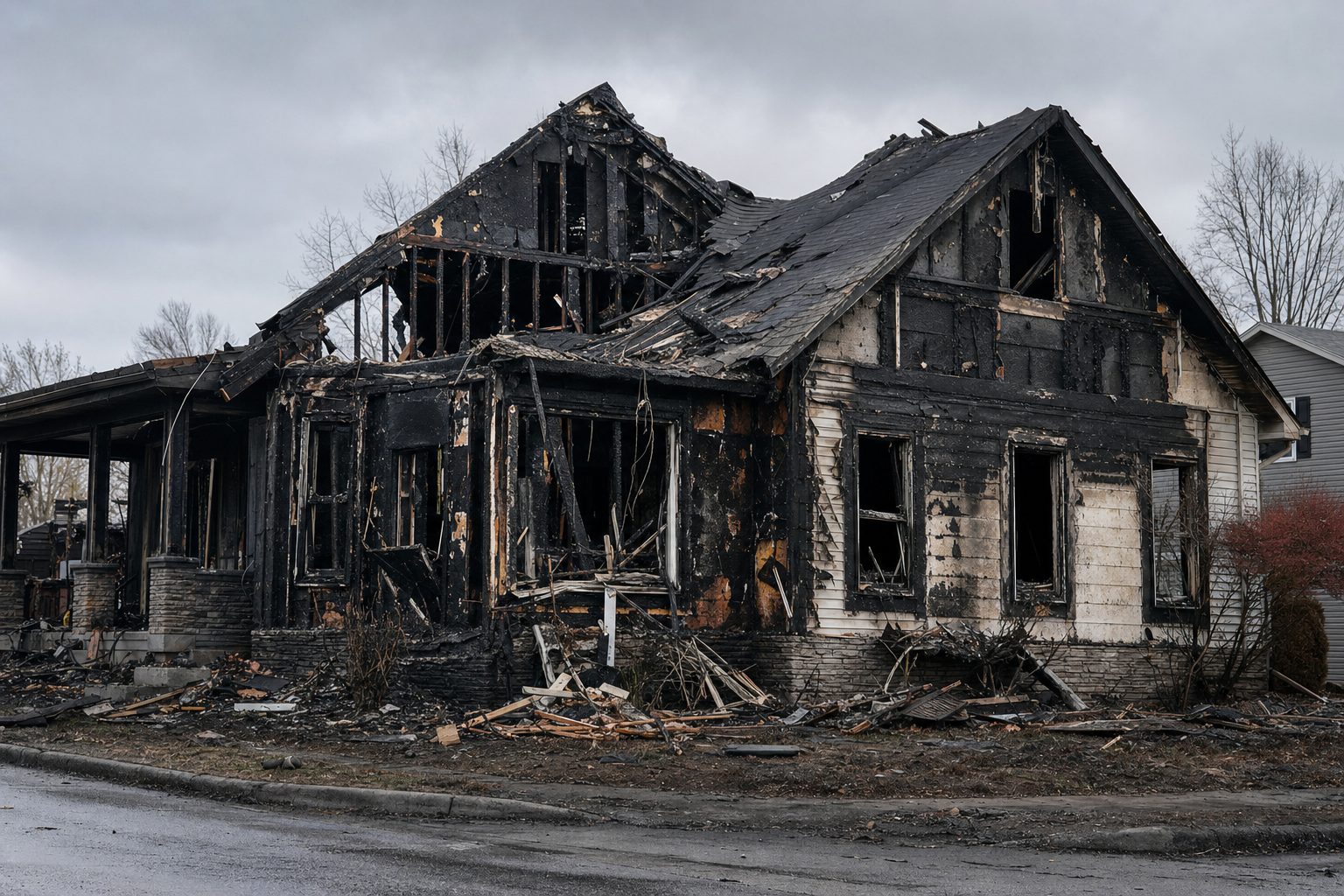
After a house fire, smoke does not stay in the room where the fire happened. Your HVAC system pulls smoke-laden air through the entire ductwork, depositing soot on coils, blower wheels, and duct surfaces throughout every room your system serves. A fire in one room creates a contamination problem in the whole house.
The Fire Was in One Room. The Smoke Was Everywhere.
This is one of the most consistent surprises for East Texas homeowners after a fire. The visible fire damage may be contained to the kitchen or a bedroom. But the smoke followed the air. And in any home with a central HVAC system, the air went everywhere.
Smoke odor and soot contamination in rooms with no visible fire damage is not coincidental. It is the predictable result of how HVAC return air systems work.
How HVAC Contamination Happens After a Fire
Your HVAC system works by pulling air from living spaces back to the air handler through return air vents. During a fire, this process does not stop:
- Smoke fills the room or space where the fire occurred
- Return air vents pull smoke-laden air through ductwork to the air handler unit
- Soot particles deposit on evaporator coils, blower wheels, and duct walls throughout the system
- When the system cycles back on after the fire, it redistributes those soot particles through supply ducts into every room the system serves
This is why homeowners report persistent smoke odor months after a fire. The HVAC system was never cleaned, and every time it runs, it recirculates soot particles into the living space.
Why HVAC Cleaning Cannot Wait
Soot is acidic. Left on metal components, it corrodes them. Evaporator coils, blower wheels, and metal duct surfaces that are not cleaned promptly after a fire experience ongoing corrosion that compounds over time.
An HVAC system that is not cleaned promptly after a fire may require full component replacement rather than cleaning by the time the corrosion is addressed, at a significantly higher cost and disruption. This is a situation where early action directly reduces total loss.
What Post-Fire HVAC Cleaning Actually Involves
Post-fire HVAC cleaning is not a standard duct cleaning appointment. It requires specific steps:
- Evaporator coil cleaning: Soot on coils requires appropriate cleaning agents and techniques. Standard coil cleaning products are not formulated for soot removal.
- Blower wheel cleaning: Soot accumulates on blower wheel fins, causing imbalance and reducing airflow. This component requires specific attention.
- Duct interior cleaning: Supply and return ducts accumulate soot deposits on interior surfaces that standard duct cleaning tools may not fully address without smoke-specific protocol.
- Air handler interior decontamination: The entire air handler interior needs assessment and cleaning, not just the coil and filter sections.
- Filter replacement: Any filter in place during the fire event should be replaced.
A Story from Marshall: The Smell That Would Not Leave
A family in Marshall had a fire that originated in the utility room and was contained before it reached the adjacent living spaces. The visible fire damage was significant in the utility room but did not extend into the main living areas. The family had the utility room restored and repainted and believed the job was done.
Six months later, they called because the smoke odor had never left. It was worse when the air conditioner ran.
When Cantt Restoration assessed the property, the HVAC system had never been addressed. The return air vent was directly across the hallway from the utility room. Soot was visible on the evaporator coil and blower wheel surfaces. Every time the system cycled, it was circulating residual soot into the living space.
HVAC cleaning and decontamination addressed what the visible restoration had missed. The odor resolved after the system was properly cleaned.
How Cantt Restoration Addresses HVAC Contamination
We assess HVAC contamination as a standard part of every fire damage evaluation. Smoke migration follows air, and air follows the HVAC system. A fire assessment that does not include the HVAC is an incomplete assessment.
We coordinate complete HVAC remediation to ensure the system does not continue redistributing soot after surface restoration is complete. We follow ANSI/IICRC S520 standards for fire and smoke remediation on every job.
Call Cantt Restoration 24/7
If your home has experienced fire or smoke damage, the HVAC system needs to be part of the conversation from the start. Call us now.
Cantt Restoration: (903) 251-9525
Sometimes the damage is minimal and you might not need us. We will tell you that too.
This content is for general informational purposes only and does not constitute legal, insurance, or professional restoration advice. Cantt Restoration is not a policy expert, attorney, or public adjuster. Every loss situation is unique. For questions about your coverage, contact your insurance company, adjuster, or agent directly. For assessment of your specific situation, consult a qualified restoration professional. Cantt Restoration follows ANSI/IICRC S500, S520, and S740 standards on every job.
Call Cantt Restoration 24/7
We respond around the clock across East Texas. On-site within the hour.
(903) 251-9525Sometimes the damage is minimal and you might not need us. We will tell you that too.