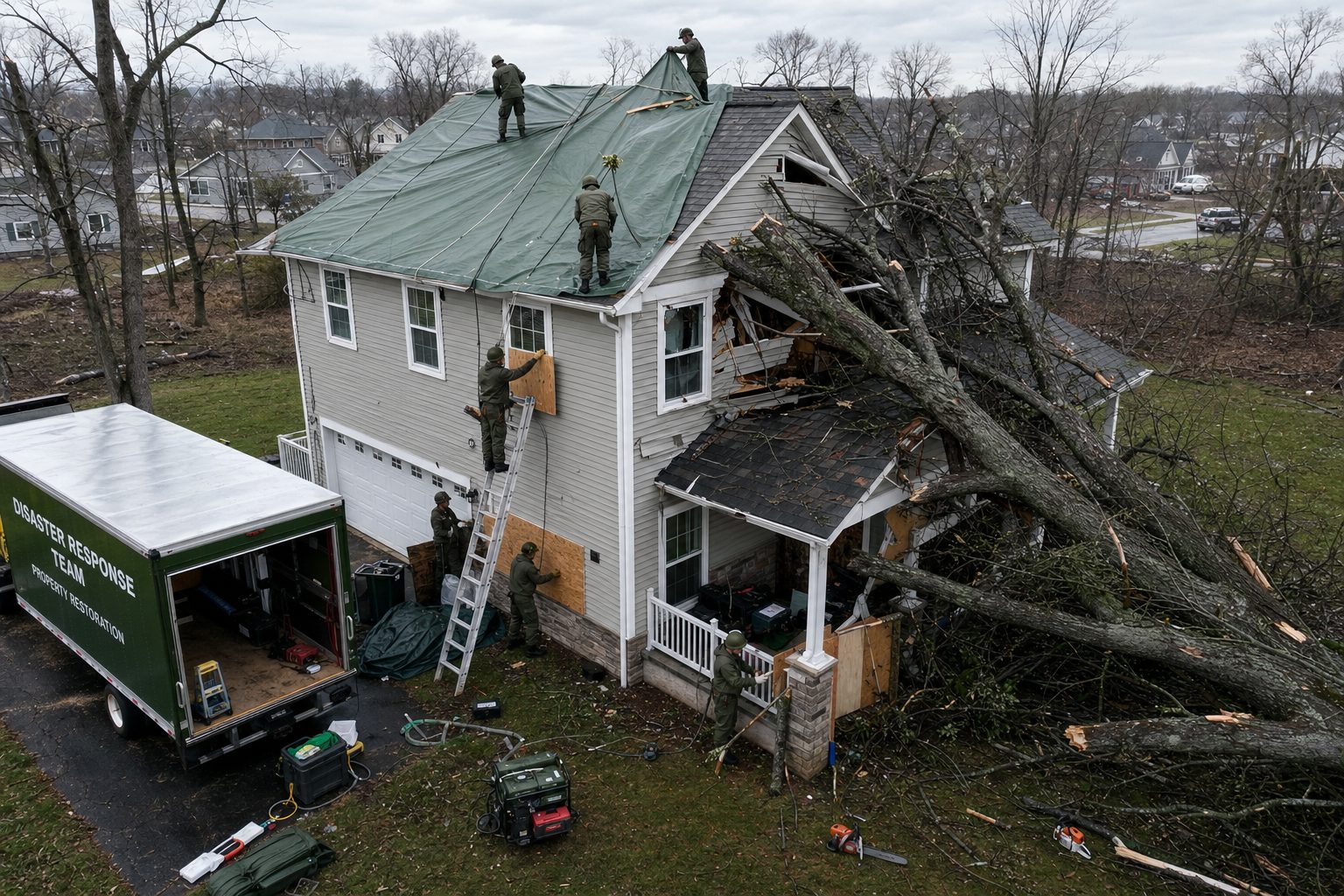
East Texas flash flooding is one of the most dangerous weather events in the region. Water rises faster than warnings propagate, drainage systems overwhelm in minutes, and homes flood with little notice. If you are in a flash flood situation right now: life safety first, property second. Get out if there is any risk.
What Makes East Texas Flash Flooding So Dangerous?
Flash floodwater in East Texas reaches structures from multiple directions: overwhelmed drainage systems, surface water accumulation across clay soil that does not absorb water quickly, and creek and low-water crossing flooding that cuts off evacuation routes in minutes.
Homes outside of designated flood zones flood in East Texas flash events regularly. Zone designation does not equal safety in a significant rainfall event.
The rule is absolute: if you do not feel safe, walk out. Call 911. Property can be restored. People cannot.
What Are the Life-Safety Steps During a Flash Flood?
- 1. Evacuate immediately if there is any risk that water will reach inhabited levels of your home
- 2. Do not drive through flooded roads. Six inches of moving water can knock a person down. Two feet of moving water can sweep a vehicle away.
- 3. Do not enter a flooded basement if electrical systems may be active
- 4. Move to upper floors if evacuation is not possible. Do not shelter in basements during a rising water event.
If your home is accessible after the water recedes and you are unsure whether it is structurally safe, call 911 first. Do not re-enter an unknown situation alone.
Why Is Flash Floodwater Considered Category 3?
Flash floodwater is Category 3 (black water) in every case per ANSI/IICRC S500. It has traveled across roads, parking areas, agricultural land, and sewage infrastructure before entering your home. It carries:
- Soil-borne pathogens
- Agricultural chemicals from nearby land
- Sewage from overwhelmed collection systems
- Fuel and chemical runoff from paved surfaces
Every surface the floodwater contacted is contaminated. Every porous material that absorbed Category 3 water must be removed. The CDC mold guidance supports professional remediation of all flood-affected materials. Do not attempt to clean Category 3 floodwater damage yourself.
An East Texas Scenario: Kaufman County After a Rapid Rain Event
A family in the Kaufman area called Cantt Restoration after flash flooding entered the ground floor of their home during a rapid overnight rain event. The water had reached approximately 8 inches in the living room and kitchen before receding.
Our team arrived with extraction equipment and Category 3 remediation protocols. Before any work began, we used Matterport 3D scanning to document the full extent of the loss and FLIR thermal imaging to identify moisture migration into wall cavities. Every porous material at flood level was removed per ANSI/IICRC S500 Category 3 requirements.
This is fixable. We have seen worse. Call us.
What Can Be Saved After East Texas Flash Flooding?
Hard-surface items, electronics that were powered off and not submerged for extended periods, and many contents can be professionally cleaned and restored. Porous materials that contacted Category 3 water, including carpet, padding, drywall, insulation, and organic flooring materials, must be removed.
Bioesque antimicrobial treatment is applied to structural surfaces after porous material removal and before drying is complete.
Call Cantt Restoration 24/7: (903) 251-9525
Do what you safely can to limit further damage while you wait. If you do not feel safe, do not go back in. Call us first and we will walk you through it.
Sometimes the damage is minimal and you might not need us. We will tell you that too.
This content is for general informational purposes only and does not constitute legal, insurance, or professional restoration advice. Cantt Restoration is not a policy expert, attorney, or public adjuster. Every loss situation is unique. For questions about your coverage, contact your insurance company, adjuster, or agent directly. For assessment of your specific situation, consult a qualified restoration professional. Cantt Restoration follows ANSI/IICRC S500, S520, and S740 standards on every job.
Frequently Asked Questions
Is flash floodwater safe to clean up myself?
No. Flash floodwater is Category 3 (black water) containing soil-borne pathogens, sewage overflow, agricultural chemicals, and fuel runoff. Contact with this water without proper protective equipment creates serious health risk. Professional remediation with full personal protective equipment and contamination protocols is required per ANSI/IICRC S500.
What should I do first after my East Texas home floods from a flash flood?
Prioritize life safety above all else. Evacuate if you have not already done so. Do not re-enter the home until it has been confirmed structurally sound and electrical systems have been verified safe. Once safe, contact a professional restoration company immediately. Do not attempt Category 3 cleanup without professional assistance.
Can anything be saved after flash flooding?
Yes. Hard-surface items, properly secured electronics, and many contents can be professionally cleaned and restored even after Category 3 flood exposure. Porous materials that absorbed floodwater must be removed per ANSI/IICRC S500. The sooner a professional assessment begins, the more can be evaluated for restoration.
How long after flash flooding does mold begin to develop?
In East Texas temperature and humidity conditions, mold can begin developing on wet organic materials within 24 to 48 hours. Porous flood-affected materials that remain in place past this window create compounding mold conditions on top of the contamination hazard. Rapid professional response is essential.
Does Cantt Restoration respond to flash flood events across all of East Texas?
Yes. Cantt Restoration provides 24/7 emergency response across Tyler, Longview, Lindale, Marshall, and the broader East Texas region. Call (903) 251-9525 any hour for flash flood emergency response.