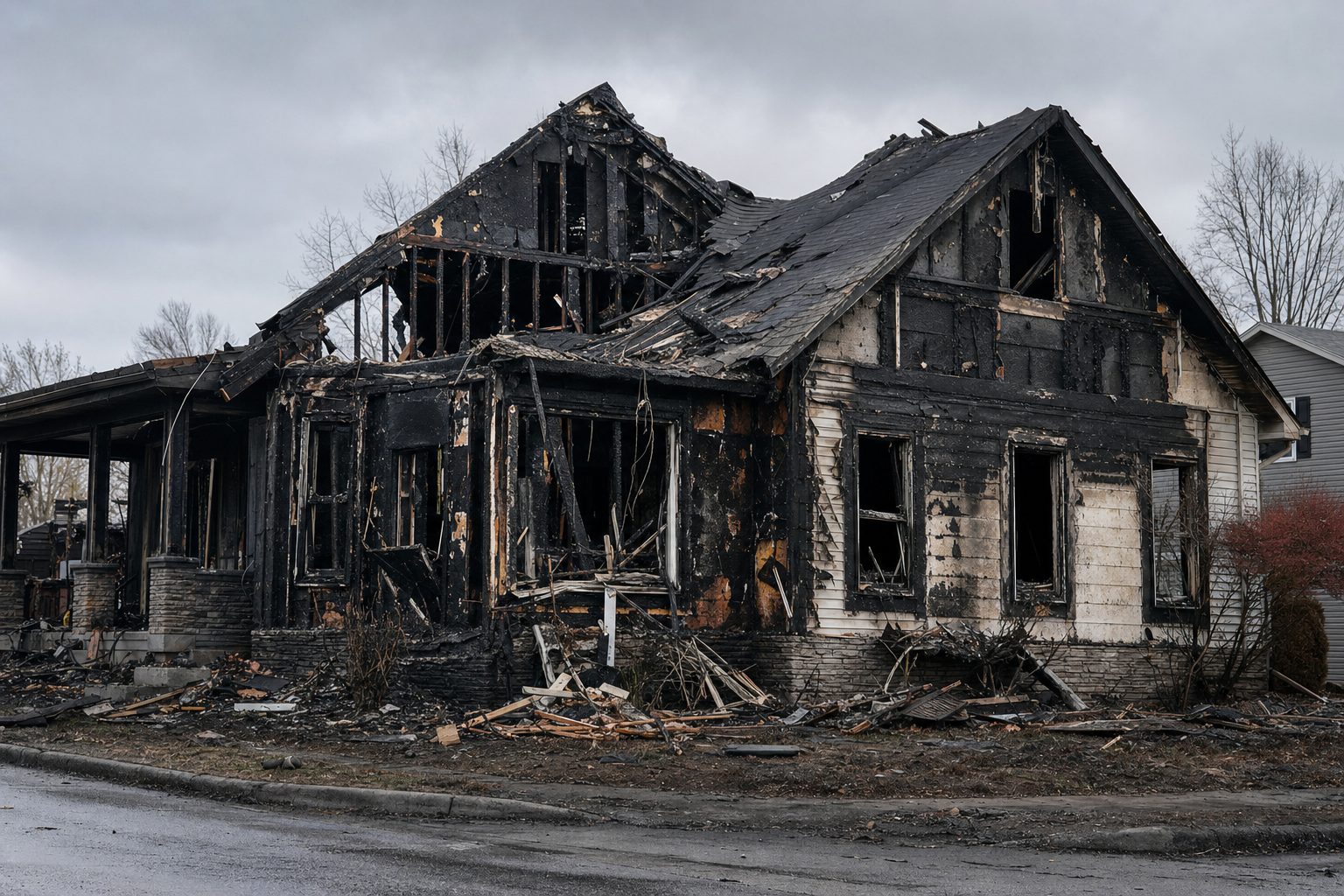
The type of fire that occurred in your home determines what kind of soot you have, and that determines how it must be cleaned. Identifying soot type before any cleaning begins is the most important step in fire damage restoration. Using the wrong method on the wrong soot type causes permanent damage to surfaces that would otherwise be fully restorable.
Why Does Soot Type Matter for Cleaning?
Walk into two fire-damaged East Texas homes and you may see completely different contamination: one with a dry gray powder that coats every surface, another with a barely visible film that carries an overwhelming odor. Both are soot. Neither is cleaned the same way.
The ANSI/IICRC S500 standard and related fire and smoke standards require identification of soot type and surface material before any cleaning method is selected. Applying wet cleaning to dry soot, or standard agents to protein soot, does not just fail to remove the contamination. It can push it permanently into porous surfaces.
What Is Dry Soot and How Is It Cleaned?
Dry soot results from fast, hot fires burning natural materials such as wood, paper, or fabric in well-ventilated conditions.
Appearance: Gray or black powder. Often the most visually dramatic soot type. Covers surfaces broadly.
Cleaning approach: Dry soot must be removed first with chemical sponges and dry-cleaning methods. Wet cleaning can follow after dry removal, but not before. Applying wet cleaning first pushes dry soot into porous surface textures where it becomes permanent.
What Is Wet Soot and Why Is It So Difficult to Remove?
Wet soot comes from slow, low-temperature, low-oxygen fires. Smoldering mattresses, burning rubber, and plastics produce wet soot.
Appearance: Dark, sticky, and pungent. It smears when touched. It is among the most difficult soot types to remove.
Cleaning approach: Wet soot requires strong degreasers and multiple cleaning passes. Dry methods are ineffective. Wet cleaning with solvent chemistry matched to the specific residue type must come first.
What Is Protein Soot and Why Is It the Most Commonly Mistreated?
Protein soot results from burning food, grease, or organic material. Kitchen fires and grease fires are the primary source.
Appearance: Nearly invisible. A thin, amber-colored film on surfaces that is detected by odor before it is seen.
Cleaning approach: Protein soot requires enzyme-based or protein-dissolving cleaners. Standard cleaning agents spread it without removing it. This is the soot type most commonly made worse by non-professional cleaning attempts.
A Troup Kitchen Fire: Seeing All Three Types
A family in Troup had a stovetop grease fire that extended to adjacent cabinetry. The fire itself was quickly controlled. The contamination was not simple.
The grease fire produced heavy protein soot on all kitchen surfaces, petroleum-based wet soot on the stovetop and surrounding cabinetry, and dry soot that had traveled through the HVAC system to reach the living room.
Cantt Restoration assessed each zone separately, identified the soot type on each surface category, and applied the correct chemistry and sequence for each area. The wrong approach on any zone would have permanently damaged surfaces that were fully restorable with the right one.
How Does Cantt Restoration Identify Soot Type?
We assess the fire origin, the materials involved, and test the residue on affected surfaces before any cleaning begins. We then apply the correct method and chemical sequence for each surface and soot type combination. This is not a single-product job. Every fire is different.
For smoke spread throughout the HVAC system, we assess ducts and air handler components separately from the fire origin area.
Call Cantt Restoration 24/7: (903) 251-9525
Sometimes the damage is minimal and you might not need us. We will tell you that too.
This content is for general informational purposes only and does not constitute legal, insurance, or professional restoration advice. Cantt Restoration is not a policy expert, attorney, or public adjuster. Every loss situation is unique. For questions about your coverage, contact your insurance company, adjuster, or agent directly. For assessment of your specific situation, consult a qualified restoration professional. Cantt Restoration follows ANSI/IICRC S500, S520, and S740 standards on every job.
Frequently Asked Questions
What are the three main types of fire soot found in East Texas homes?
The three primary soot types are dry soot (from fast, hot fires burning natural materials, appearing as gray or black powder), wet soot (from slow smoldering fires involving rubber or plastics, appearing dark, sticky, and difficult to remove), and protein soot (from kitchen and grease fires, appearing as a nearly invisible but odorous film requiring enzyme-based cleaning).
Can I clean soot myself after a kitchen fire?
Attempting to clean soot, particularly protein soot, without knowing the soot type and proper chemistry typically worsens the contamination. Standard household cleaners spread protein soot across surfaces without removing it. Professional assessment of soot type and surface material before any cleaning begins is the industry standard approach.
How does smoke spread beyond the room where a fire occurred?
Smoke from any fire enters the HVAC return air system, which pulls it through ducts and deposits soot on coil surfaces, blower components, and duct walls throughout the home. Every room served by the HVAC system is potentially contaminated even when the fire was contained to one room.
Why is protein soot so hard to see but so difficult to remove?
Protein soot is deposited as a very thin, semi-transparent film that blends with surface color. Its presence is typically detected by odor before it is visible. It requires enzyme-based cleaners that break down the protein molecular structure. Standard cleaners cannot dissolve it and typically redistribute it across more surface area.
How soon after a fire should professional cleaning begin?
Soot begins corroding metal surfaces, etching glass, and permanently staining fabrics within hours to days of deposition. The cleaning window is real: the sooner professional cleaning begins, the more surfaces can be fully restored rather than requiring replacement.