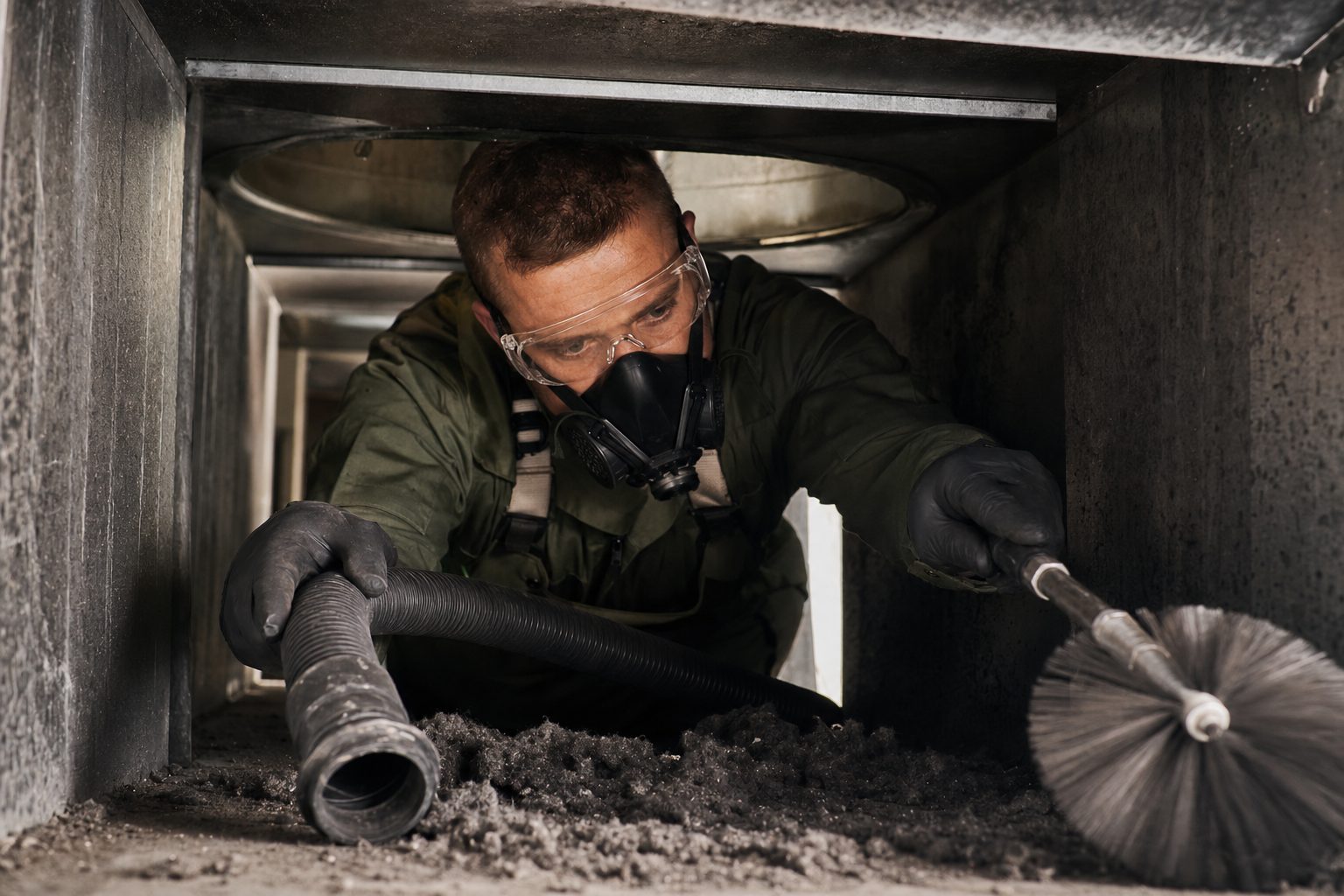
After a house fire, most East Texas homeowners focus on the rooms that burned. They do not think about the HVAC system that may have been running during the fire, pulling smoke-laden air through the return system and depositing acidic soot on the evaporator coils. Soot on HVAC coils is not just a cleaning problem. It is a corrosion problem, and it begins the moment the fire smoke reaches those coils.
Why Does Smoke Damage to HVAC Coils Happen?
HVAC systems run on a cycle. The air handler pulls return air from the home through return vents, passes it through the filter, across the evaporator coil, and distributes conditioned air back through supply vents. During a fire, the concentration of smoke particles in the home air is far higher than normal operation. If the system runs during or after the fire, it draws that smoke-saturated air directly across the evaporator coil.
The evaporator coil is made of copper tubing with aluminum fins: two metals that are highly vulnerable to acidic corrosion. Soot from a fire is acidic. When acidic soot deposits on coil surfaces and combines with ambient humidity, the resulting chemistry accelerates corrosion of the copper tubing and aluminum fins on contact. This is not a gradual process. Within days, coil fins can begin to corrode, pit, and fail. Coil failure means HVAC system failure.
Why Is This More Than a Cleaning Problem?
Standard coil cleaning for routine HVAC maintenance removes dust and biological buildup. It is not designed for soot that has bonded to metal surfaces and initiated a corrosion reaction. Post-fire coil cleaning requires chemical agents matched to the specific soot type, full coil fin combing to straighten damaged fins and improve cleaning access, complete neutralization and rinse to remove cleaning agent residue, and airflow testing after cleaning to confirm the coil is performing correctly.
Applying standard maintenance cleaning to a soot-contaminated coil can push soot deeper into the fin structure, increase surface area for corrosion, and accelerate the failure timeline rather than prevent it. This is not a DIY task.
What Happens If Coil Corrosion Is Left Unaddressed?
Corroded coil fins lose their ability to transfer heat efficiently. The coil operates under higher stress, refrigerant capacity is reduced, and eventually the copper tubing develops pinhole leaks. At that point, the coil requires replacement. Evaporator coil replacement is a significant cost. Prompt post-fire coil cleaning is a small fraction of that cost.
Beyond the coil itself, a contaminated HVAC system continues to circulate soot particles and odor-carrying compounds through every room of the home every time the system runs. This re-contaminates surfaces that have been cleaned and prolongs smoke odor throughout the structure.
A Scenario From Brownsboro
A family in Brownsboro had a kitchen fire that was contained to the kitchen and adjacent hallway. The structure was not severely damaged, and the family assumed the HVAC system was unaffected because the fire was in one room. They ran the system to ventilate smoke odor from the home.
Cantt Restoration's assessment found visible soot deposition on the evaporator coil and return air ductwork. The family had been running the system for three days since the fire, cycling contaminated air through the home and accelerating coil corrosion. Post-fire coil cleaning addressed the contamination. The family also understood why the smoke odor had not improved despite the ventilation attempt: the HVAC system was continuously redistributing it.
What Cantt Restoration Does for HVAC After a Fire
We include HVAC assessment in every fire loss evaluation as a standard component, not an optional add-on. The HVAC system is a contamination source for the entire home. We assess filter condition, return duct contamination, and coil status. We coordinate professional HVAC cleaning for the full system before advising that the system is safe to operate.
The first action after any fire is to turn off the HVAC system. Not turn it down. Turn it off. Until the system is assessed and cleaned, every cycle increases the scope of contamination. Call Cantt Restoration for the full-structure assessment that includes your HVAC system.
Call Cantt Restoration 24/7
(903) 251-9525Sometimes the damage is minimal and you might not need us. We will tell you that too.
Send Us a Photo for a Free Assessment
Not sure how bad the damage is? Send a photo and we will give you an honest assessment. No sales pitch. No pressure.
Send a Photo- One or two clear photos of the affected area is plenty
- No need to include people, faces, or personal documents
- Photos of walls, floors, ceilings, or contents are most useful
Photos submitted are used solely to assess your situation. They are not shared, sold, or published without your written consent. You may also email photos directly to contact@canttrestoration.com.
Cantt Restoration serves all of East Texas, Smith County, Cherokee County, Wood County, Gregg County, and beyond. Based in Arp, TX. Call (903) 251-9525.
This content is for general informational purposes only and does not constitute legal, insurance, or professional restoration advice. Cantt Restoration is not a policy expert, attorney, or public adjuster. Every loss situation is unique. For questions about your coverage, contact your insurance company, adjuster, or agent directly. For assessment of your specific situation, consult a qualified restoration professional. Cantt Restoration follows ANSI/IICRC S500, S520, and S740 standards on every job.
Frequently Asked Questions
Does a house fire damage HVAC evaporator coils?
Yes. If the HVAC system runs during or after a fire, it pulls smoke-laden air across the evaporator coil and deposits acidic soot on the copper tubing and aluminum fins. Soot from fire is acidic and initiates a corrosion reaction that can begin to pit and fail coil fins within days if not promptly cleaned.
What should I do with my HVAC system immediately after a house fire?
Turn off the HVAC system immediately. Do not run it to ventilate smoke odor. Each operating cycle draws smoke-laden air across the evaporator coil and distributes soot particles and odor compounds through every room. The system should remain off until a professional post-fire assessment and cleaning is complete.
Can I clean HVAC coils myself after a fire?
Post-fire coil cleaning requires chemical agents matched to the specific soot type and proper neutralization to prevent further damage. Standard maintenance cleaning is not appropriate for soot-contaminated coils. Improper cleaning can push soot deeper into the fin structure and accelerate corrosion. This work should be performed by professionals with post-fire HVAC cleaning experience.
How does soot from a fire spread through the HVAC system?
The HVAC return system draws air from throughout the home and passes it across the evaporator coil. During a fire, smoke-saturated air from all areas of the home is pulled through this path. Soot deposits on the filter, the return duct surfaces, and the evaporator coil. When the filter saturates, soot bypasses it and reaches the coil directly.
What does Cantt Restoration include in a post-fire HVAC assessment?
Cantt Restoration's post-fire assessment includes evaluation of filter condition and contamination, inspection of return ductwork for soot deposition, assessment of evaporator coil for soot and early corrosion, and coordination of full system cleaning by qualified HVAC professionals before the system is returned to operation. HVAC assessment is included in every fire loss evaluation as a standard component.