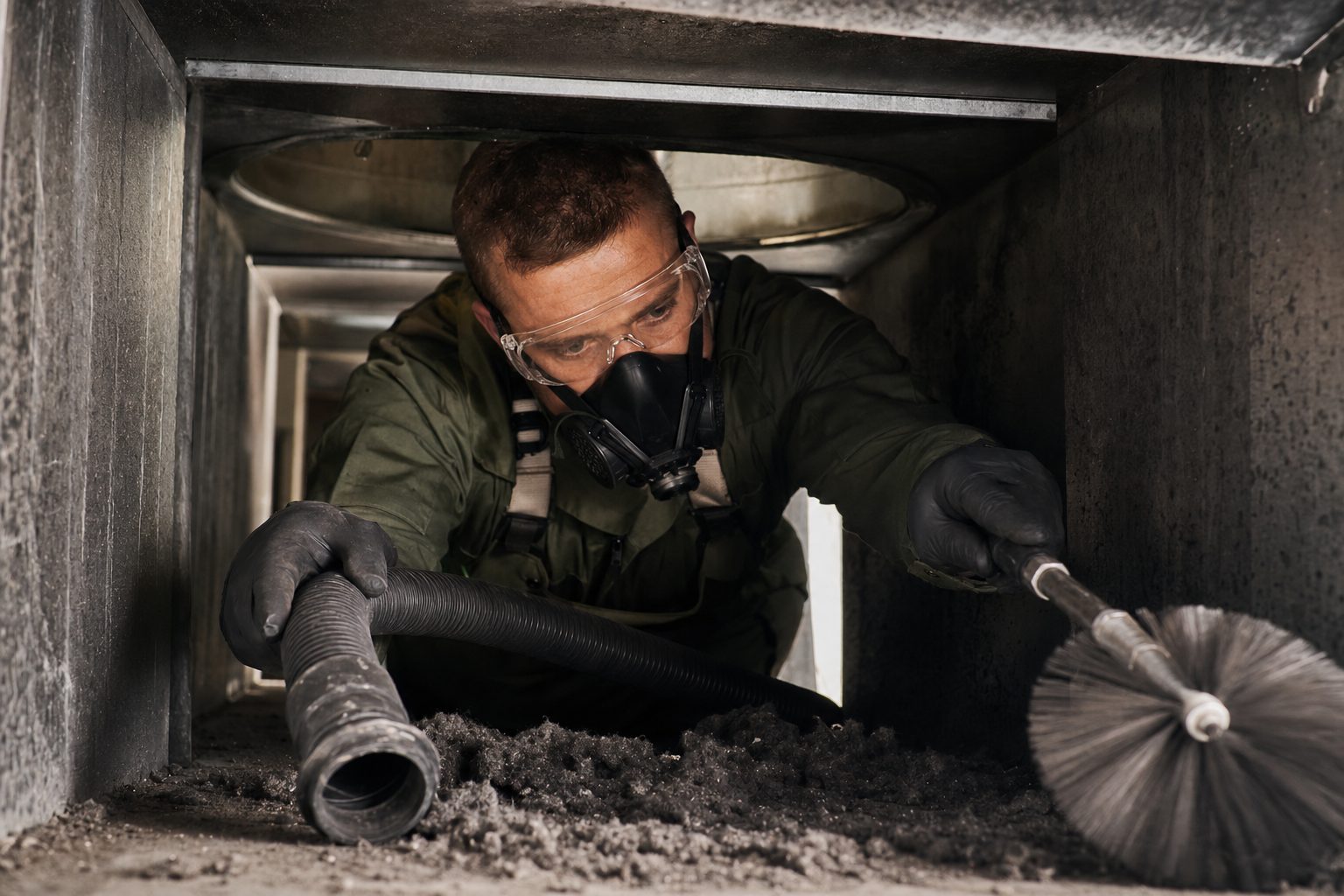
Your HVAC system is the circulatory system of your home. Whatever contaminates the air, smoke, soot, mold spores, can be distributed to every room the system serves. After a water loss or fire, your ductwork may be carrying contamination you cannot see or smell yet. Skipping HVAC and duct cleaning after a major loss means the home is not truly remediated.
When Is Duct Cleaning Necessary After Water Damage?
Not every water loss requires duct cleaning. But the following situations do:
- Flooding reached HVAC return air vents: Return vents pull air from living spaces. If floodwater reached these vents, water may have entered the duct system
- HVAC system ran during a mold event: If the system operated while mold (what restoration professionals classify as microbial growth) was present and spores were airborne, those spores were distributed through ductwork
- Sewage or Category 3 water event: Contaminated air from a sewage event enters return ductwork and deposits contamination on duct surfaces
When Is Duct Cleaning Necessary After Fire Damage?
After virtually any significant fire, duct cleaning is warranted:
- The return air system pulled smoke-laden air through ducts during the fire event
- Soot deposits on duct walls, coils, and HVAC components
- Every time the system runs without cleaning, it redistributes soot throughout the home
What Proper Post-Loss Duct Cleaning Involves
- Inspection of all supply and return ducts for soot deposit, mold, or contamination
- Mechanical cleaning of duct interior surfaces
- Coil cleaning: evaporator coils are a primary soot collection point after fire
- Blower wheel cleaning and air handler interior decontamination
- Filter replacement and airflow verification after cleaning is complete
An East Texas Story: A Mineola Home and Months of Redistributed Soot
A Mineola homeowner had a bedroom fire remediated by a restoration company that did not include HVAC assessment in its scope. The structural damage was addressed. The soot in the affected bedroom was cleaned. The homeowner moved back in.
Over the following three months, the homeowner noticed soot deposits reappearing on supply registers in rooms throughout the house, including rooms that had not been affected by the fire. The HVAC system had been distributing residual soot from the contaminated ductwork with every cycle since the restoration was declared complete.
Cantt Restoration assessed and cleaned the full HVAC system, including duct interiors, evaporator coil, blower wheel, and all filters. The soot deposition stopped. But three months of soot had been distributed to every room before the source was addressed.
We Address the Full System
Cantt Restoration assesses HVAC and duct conditions as part of every significant fire or water loss evaluation. We follow ANSI/IICRC S500 and EPA guidelines throughout. We do not leave the system behind when we close a job.
Call Cantt Restoration 24/7
(903) 251-9525Sometimes the damage is minimal and you might not need us. We will tell you that too.
Send Us a Photo for a Free Assessment
Not sure how bad the damage is? Send a photo and we will give you an honest assessment. No sales pitch. No pressure.
Send a Photo- One or two clear photos of the affected area is plenty
- No need to include people, faces, or personal documents
- Photos of walls, floors, ceilings, or contents are most useful
Photos submitted are used solely to assess your situation. They are not shared, sold, or published without your written consent. You may also email photos directly to contact@canttrestoration.com.
Cantt Restoration serves all of East Texas , Smith County, Cherokee County, Wood County, Gregg County, and beyond. Based in Arp, TX. Call (903) 251-9525.
This content is for general informational purposes only and does not constitute legal, insurance, or professional restoration advice. Cantt Restoration is not a policy expert, attorney, or public adjuster. Every loss situation is unique. For questions about your coverage, contact your insurance company, adjuster, or agent directly. For assessment of your specific situation, consult a qualified restoration professional. Cantt Restoration follows ANSI/IICRC S500, S520, and S740 standards on every job.
Frequently Asked Questions
Do I need duct cleaning after water damage?
Duct cleaning is necessary after water damage if floodwater reached HVAC return vents, the system ran during a mold event distributing spores, or a sewage or Category 3 water event caused contaminated air to enter the duct system.
Why is duct cleaning important after a house fire?
During a fire, the return air system pulls smoke through ducts, depositing soot on duct walls, coils, and the blower wheel. Running the HVAC without cleaning redistributes soot to every room, creating ongoing contamination after the fire is extinguished.
What does post-fire duct cleaning include?
Post-fire duct cleaning includes mechanical cleaning of supply and return duct interiors, evaporator coil cleaning, blower wheel cleaning, and air handler interior decontamination, significantly more involved than standard annual duct cleaning.
Can I tell if my ducts need cleaning after a fire?
The most reliable indicators are visible soot deposits at or near supply registers, a musty or smoke odor that appears when the system runs, and a history of the system operating during the fire event. Professional assessment of the duct interior is the only way to confirm the extent of contamination.
Does every fire require duct cleaning?
Most significant fires that caused the HVAC system to operate during the event require duct cleaning. Small, completely contained fires where the HVAC was off throughout may not, but professional HVAC assessment should confirm this before the system is restarted after any fire.