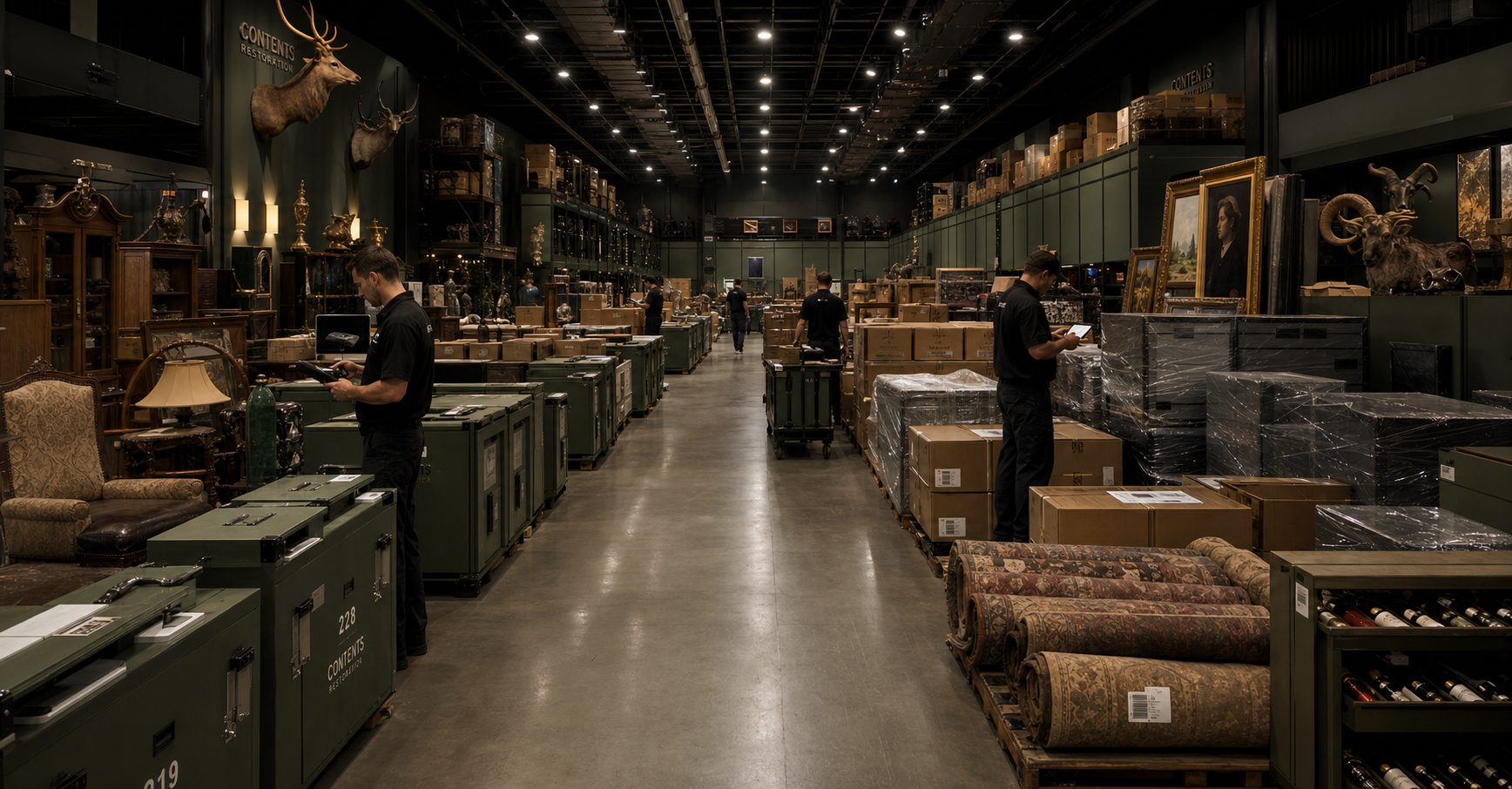
After a house fire, smoke-damaged furniture looks and smells like a total loss. But furniture restoration is one of the areas where professional contents restoration makes the most dramatic difference, and where homeowners most often give up prematurely. We have restored upholstered sofas, dining sets, beds, and heirloom pieces that appeared completely destroyed by smoke and soot.
What Smoke Does to Different Furniture Types
Upholstered Furniture
Fabric absorbs smoke molecules at a molecular level. Foam interiors absorb odor compounds deeply. Surface soot must be removed before any wet cleaning. Wet soot spreads and sets permanently. The sequence is critical: dry removal first with chemical sponges, then cleaning with material-appropriate agents, then odor treatment with ozone or thermal fogging.
Wood Furniture
Wood grain absorbs soot and odor into the surface. Finished wood surfaces, lacquer, polyurethane, wax, can hold soot without absorption initially, but heat from fires can cause finish failure that exposes raw wood to contamination. Cleaning sequence and chemical compatibility with existing finishes are critical. The wrong cleaning agent can damage a finish that survived the fire.
Leather Furniture
Leather absorbs soot and odor and requires pH-matched cleaning agents. Improper cleaning cracks and permanently damages leather surfaces. Ozone treatment reaches embedded odor molecules without direct leather contact, which is the appropriate approach for leather odor treatment.
Professional Cleaning Sequence for Smoke-Damaged Furniture
- Dry soot removal: Chemical sponges and dry cleaning methods remove surface soot without spreading. This step must come before any wet cleaning.
- Appropriate wet cleaning: Fabric, leather, or wood-specific cleaning agents matched to the material type and soot type
- Odor treatment: Ozone or thermal fogging to address embedded odor molecules in foam cores, wood grain, and fabric fibers
- Conditioning: Leather conditioning and wood conditioning post-cleaning to restore surface integrity
An East Texas Story: A Tyler Home and an Heirloom Dining Set
A Tyler family had a kitchen fire that produced heavy wet soot throughout the adjacent dining room. The dining room contained a solid oak dining set that had belonged to the homeowner's grandmother. The set was heavily soot-covered and had a strong smoke odor throughout. The homeowner's initial assumption was that it could not be saved.
Cantt Restoration assessed the dining set for structural damage: none. The fire had not reached the dining room. The soot was wet soot from a slow-burning kitchen fire, which required a specific cleaning approach. Dry soot removal first, then wood-appropriate wet cleaning with careful attention to the existing oil finish, then thermal fogging for odor treatment. The set was restored. The heirloom survived.
When Furniture Is a Total Loss
Furniture with direct flame damage, structural failure, or complete foam combustion may not be restorable. We assess every item honestly. Some items are total losses. We tell you that too, and we document it either way. We follow ANSI/IICRC S500 and S520 standards throughout.
Call Cantt Restoration 24/7
(903) 251-9525Sometimes the damage is minimal and you might not need us. We will tell you that too.
Send Us a Photo for a Free Assessment
Not sure how bad the damage is? Send a photo and we will give you an honest assessment. No sales pitch. No pressure.
Send a Photo- One or two clear photos of the affected area is plenty
- No need to include people, faces, or personal documents
- Photos of walls, floors, ceilings, or contents are most useful
Photos submitted are used solely to assess your situation. They are not shared, sold, or published without your written consent. You may also email photos directly to contact@canttrestoration.com.
Cantt Restoration serves all of East Texas , Smith County, Cherokee County, Wood County, Gregg County, and beyond. Based in Arp, TX. Call (903) 251-9525.
This content is for general informational purposes only and does not constitute legal, insurance, or professional restoration advice. Cantt Restoration is not a policy expert, attorney, or public adjuster. Every loss situation is unique. For questions about your coverage, contact your insurance company, adjuster, or agent directly. For assessment of your specific situation, consult a qualified restoration professional. Cantt Restoration follows ANSI/IICRC S500, S520, and S740 standards on every job.
Frequently Asked Questions
Can smoke-damaged furniture be restored?
Yes. Upholstered, wood, and leather furniture can often be restored through professional dry soot removal, material-appropriate wet cleaning, and ozone or thermal fogging odor treatment. Furniture with direct flame damage or structural failure may be a total loss, but assessment comes before that determination.
What is the first step in cleaning smoke-damaged upholstery?
Dry soot removal with chemical sponges must happen before any wet cleaning. Applying wet cleaning to unsponged soot spreads and permanently sets the contamination into the fabric. Sequence matters critically in smoke damage restoration.
Can smoke odor be removed from furniture?
Yes. Ozone treatment and thermal fogging reach smoke odor molecules embedded inside foam, wood grain, and fabric fibers, neutralizing them at the source. Surface cleaning alone does not eliminate embedded odor.
What happens if wet cleaning is applied to soot-covered furniture without dry removal first?
Wet cleaning applied over dry soot spreads the soot across a wider area and permanently sets it into the fabric or surface. This converts a potentially restorable item into a more difficult or impossible restoration situation. Dry removal before wet cleaning is non-negotiable.
Can leather furniture be restored after smoke damage?
Yes, with the correct approach. Leather requires pH-matched cleaning agents specific to leather, as standard cleaning agents can crack or discolor leather surfaces. Ozone treatment addresses odor without direct contact. Proper post-cleaning conditioning is essential to restore leather flexibility and appearance.