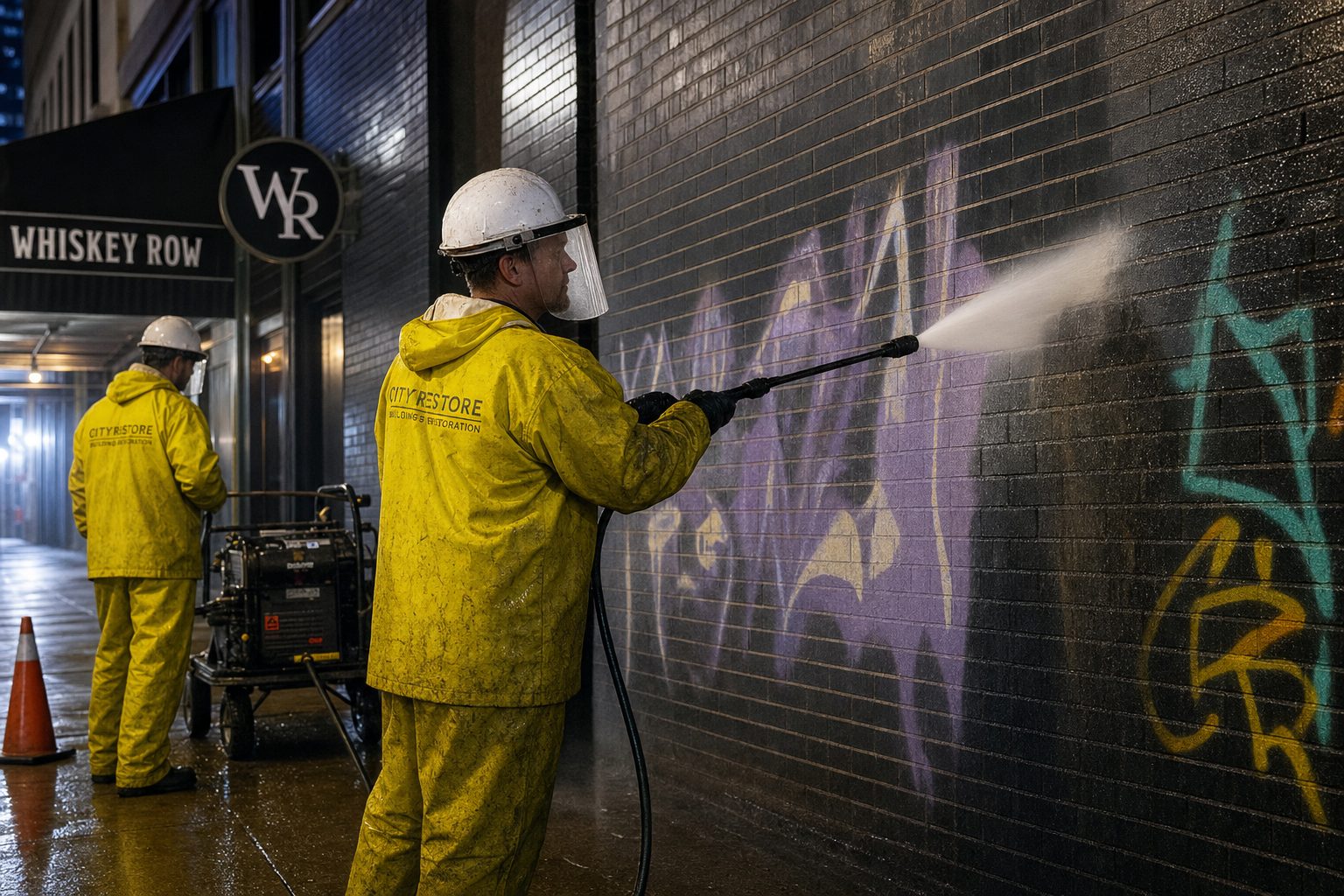
Graffiti painted over without proper surface preparation bleeds through new paint within days to weeks. Chemical tags use oil-based and solvent-based materials that penetrate porous surfaces and cannot be sealed with standard paint. Vandalism that involves broken windows or forced entry creates additional structural and security vulnerabilities that paint alone does not address.
Why Does Painting Over Graffiti Fail?
Spray paint and chemical marker compounds penetrate porous surfaces at a molecular level. On brick, concrete, and masonry, these compounds sink into the surface rather than remaining only on it. When new paint is applied over the graffiti without chemical removal, the oil-based pigments in the graffiti bleed through the new paint in a matter of days. The original graffiti reappears, now framed by the new paint layer that was applied to cover it.
This is not a paint quality issue. It is a chemistry issue. The graffiti compound must be chemically lifted from the surface before any repainting occurs.
What Does Vandalism and Graffiti Damage Actually Involve?
Surface Damage
- Spray paint and chemical markers on brick, stucco, concrete, wood, and metal
- Acid etching on glass and metal surfaces
- Scratched, carved, or damaged surface finishes
Structural and Security Damage
- Broken windows and glass with immediate security and weather exposure risk
- Forced entry points at doors, frames, and locks
- Damaged siding, panels, or exterior materials
Secondary Damage
- Water intrusion through broken windows or compromised entry points
- Weather exposure to interior spaces following structural breaches
How Does Professional Graffiti Removal Work?
Graffiti removal uses chemical solvents appropriate to the surface material. Brick and masonry respond to alkaline removers. Metal requires different chemistry than painted wood. Using the wrong removal method permanently damages the surface by either failing to remove the graffiti compound or by etching or discoloring the substrate itself.
After chemical removal, surfaces may require sealing, priming, and finishing, not to hide the damage but to restore the surface to pre-loss condition.
An East Texas Story: A Longview Commercial Property and Graffiti That Came Back
A Longview commercial property manager had a wall of the building tagged with spray paint over a weekend. The previous week, a painter had painted over a similar tag on the same wall. The new tag had appeared in the same location. The painted-over previous tag was now bleeding through the two coats of paint that had been applied over it.
Cantt Restoration chemically stripped both the new tag and the underlying residue of the previous one from the brick surface, applied a graffiti-resistant sealer to the treated area, and matched the surface finish. The property manager confirmed this was the approach that should have been taken both times.
Emergency Securing and Board-Up
Broken windows and compromised entry points are boarded with structural sheathing secured to prevent wind loading failure, not cardboard or temporary materials. Every vandalism event is documented completely before any work begins: photographs, measurements, and Matterport scanning for larger-scale events.
Call Cantt Restoration 24/7
(903) 251-9525Sometimes the damage is minimal and you might not need us. We will tell you that too.
Send Us a Photo for a Free Assessment
Not sure how bad the damage is? Send a photo and we will give you an honest assessment. No sales pitch. No pressure.
Send a Photo- One or two clear photos of the affected area is plenty
- No need to include people, faces, or personal documents
- Photos of walls, floors, ceilings, or contents are most useful
Photos submitted are used solely to assess your situation. They are not shared, sold, or published without your written consent. You may also email photos directly to contact@canttrestoration.com.
Cantt Restoration serves all of East Texas , Smith County, Cherokee County, Wood County, Gregg County, and beyond. Based in Arp, TX. Call (903) 251-9525.
This content is for general informational purposes only and does not constitute legal, insurance, or professional restoration advice. Cantt Restoration is not a policy expert, attorney, or public adjuster. Every loss situation is unique. For questions about your coverage, contact your insurance company, adjuster, or agent directly. For assessment of your specific situation, consult a qualified restoration professional. Cantt Restoration follows ANSI/IICRC S500, S520, and S740 standards on every job.
Frequently Asked Questions
Can graffiti be removed from brick and concrete?
Yes. Professional graffiti removal uses chemical solvents matched to the surface material: alkaline removers for masonry, different chemistry for metal or painted wood. Painting over graffiti without proper removal allows oil-based pigments to bleed through new paint within days.
What should I do after my property is vandalized?
Contact law enforcement to file a report. Photograph all damage for documentation. Contact a professional restoration company to secure any structural breaches (broken windows, forced entry points) and begin professional removal of graffiti before it sets further into porous surfaces.
Does Cantt Restoration handle commercial vandalism?
Yes. Cantt Restoration addresses vandalism and graffiti damage to both residential and commercial properties across East Texas, including emergency board-up and securing, professional graffiti removal, and surface restoration.
How quickly should graffiti be addressed after it appears?
The sooner graffiti is addressed, the more complete the removal. Fresh graffiti that has not fully cured and bonded to the surface is significantly easier to remove than graffiti that has been present for days or weeks. Same-day or next-day response is the professional standard.
Is acid etching on glass or metal repairable?
Acid etching on glass typically requires glass replacement, as the etching physically alters the glass surface and cannot be polished or treated back to transparency. On metal surfaces, etching may be addressable through surface preparation and refinishing depending on the depth and extent of the damage.