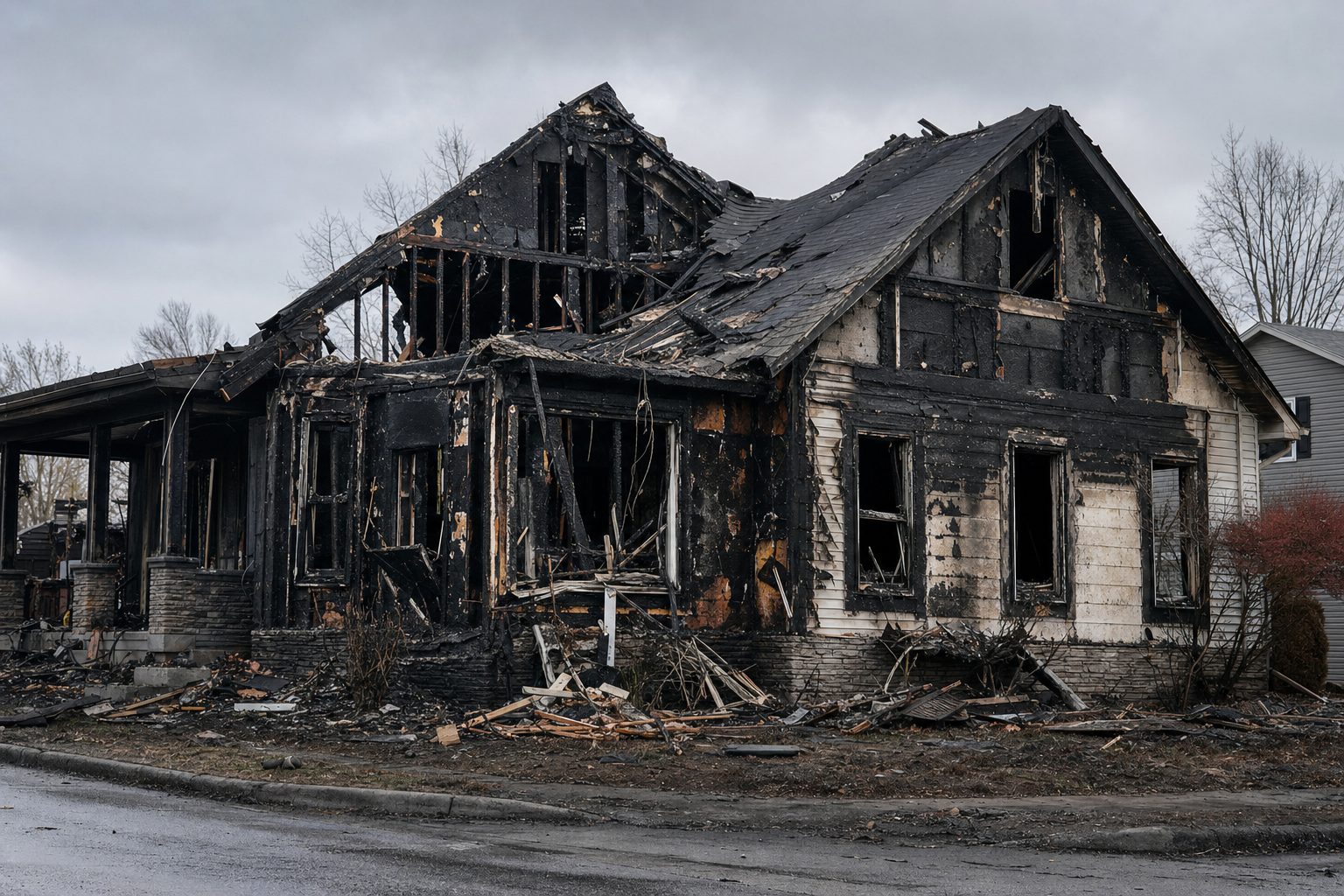
A dry Christmas tree can become fully engulfed in under 30 seconds. This is not hyperbole. Fire safety research has documented that a dry tree ignites rapidly and can fill a room with flames and toxic smoke faster than almost any other common household ignition source. If a tree fire has happened in your home, get everyone out and call 911 first. Then call us.
Why Are Christmas Tree Fires So Destructive?
A live Christmas tree that has not been watered becomes extremely dry within days. Dry needles have a very low ignition temperature and burn with intense heat and speed. Unlike many household fires that start slowly and allow time for escape, a tree fire can produce untenable conditions in a room within minutes.
The primary fire spread risk: tree fires produce high heat rapidly, igniting adjacent combustibles, including wrapped packages, upholstered furniture, window curtains, and the ceiling above the tree. What begins as a tree fire can spread to the full room within minutes.
What Causes Christmas Tree Fires?
- Electrical: Light strand failures. Old or damaged light strands, overloaded extension cords, and heat from incandescent bulbs in contact with dry needles are the leading causes of Christmas tree fires.
- Proximity to heat sources. Trees placed too close to fireplaces, space heaters, or heat registers dry out faster and have increased ignition risk from radiant heat.
- Candles. Any candle flame near a dry tree is an extreme ignition risk.
- Dry tree condition. A tree that is not watered daily or that was cut well before purchase is dry regardless of other precautions.
What Happens to a Home After a Christmas Tree Fire?
A Christmas tree fire produces one of the most complex restoration situations Cantt Restoration encounters:
- Intense soot: Tree combustion produces dense, oily soot that penetrates every surface in the fire room and migrates through the home via HVAC air movement
- Protein-type odor from burning organic material: Needle and resin combustion produces persistent odor compounds that require specific treatment to eliminate
- Extensive smoke migration: The rapid heat from a tree fire drives smoke further and faster through wall cavities and ductwork than most fires
- Water damage from suppression: Fire suppression water damages flooring, contents, and structural materials in the fire room
An East Texas Story: A Tyler Home and a Late-December Tree Fire
A Tyler family had a Christmas tree fire that started from an overloaded extension cord connection at the base of the tree. The fire was contained to the living room by quick evacuation and an early 911 call. Suppression was rapid. The damage was significant: the living room ceiling, walls, and floor all required remediation and replacement of damaged sections. Three other rooms in the open-plan layout had significant smoke and soot contamination.
Before any work began, Cantt Restoration completed a full Matterport 3D documentation of all affected spaces, thermal imaging of all walls and the HVAC system, and a complete contents inventory. The HVAC had been running when the fire started, distributing smoke throughout the home. Duct cleaning was a required component of the full restoration scope.
The family preserved their holiday ornaments, most of which had been on the portion of the tree that did not burn directly. We inventoried each one. Nothing disappears until the documentation says it did.
Prevention: The Steps That Matter Most
- Water your tree every day. A well-watered live tree is significantly more fire-resistant than a dry one.
- Use only UL-listed light strands designed for indoor use. Replace strands with broken sockets, frayed wire, or loose connections.
- Turn off all tree lights when leaving the room or going to sleep.
- Keep the tree at least three feet from fireplaces, heaters, and heat registers.
- Remove the tree promptly after the holidays. A dry tree is a fire risk regardless of lighting.
Call Cantt Restoration 24/7
(903) 251-9525Sometimes the damage is minimal and you might not need us. We will tell you that too.
Send Us a Photo for a Free Assessment
Not sure how bad the damage is? Send a photo and we will give you an honest assessment. No sales pitch. No pressure.
Send a Photo- One or two clear photos of the affected area is plenty
- No need to include people, faces, or personal documents
- Photos of walls, floors, ceilings, or contents are most useful
Photos submitted are used solely to assess your situation. They are not shared, sold, or published without your written consent. You may also email photos directly to contact@canttrestoration.com.
Cantt Restoration serves all of East Texas , Smith County, Cherokee County, Wood County, Gregg County, and beyond. Based in Arp, TX. Call (903) 251-9525.
This content is for general informational purposes only and does not constitute legal, insurance, or professional restoration advice. Cantt Restoration is not a policy expert, attorney, or public adjuster. Every loss situation is unique. For questions about your coverage, contact your insurance company, adjuster, or agent directly. For assessment of your specific situation, consult a qualified restoration professional. Cantt Restoration follows ANSI/IICRC S500, S520, and S740 standards on every job.
Frequently Asked Questions
How fast can a Christmas tree fire spread?
A dry Christmas tree can be fully engulfed in as little as 30 seconds and can create untenable room conditions within minutes. The speed of tree fires is one reason fire safety organizations emphasize both prevention and immediate evacuation when tree ignition occurs.
What soot type does a Christmas tree fire produce?
Christmas tree fires produce a complex soot mixture including dry soot from fast-burning needles and resin residue with characteristics similar to protein soot. The combination produces persistent odor compounds that require specific treatment protocols beyond standard soot cleaning.
Does homeowner insurance typically cover Christmas tree fires?
For questions about your specific coverage, contact your insurance company, adjuster, or agent directly. Cantt Restoration documents the complete fire loss and provides full written records that support your process.
Why is HVAC cleaning necessary after a Christmas tree fire?
The rapid heat from a tree fire drives smoke aggressively into the HVAC return system. The system distributes soot-laden air to every room it serves during and after the fire event. Skipping HVAC cleaning means the home is never fully remediated, as residual soot continues to circulate from the ductwork.
Can ornaments and decorations be saved after a Christmas tree fire?
Many ornaments, particularly glass, metal, and ceramic items, can be professionally cleaned and returned. Porous items like fabric or paper ornaments that absorbed heavy soot or had direct heat exposure are assessed individually. Every item is inventoried before any disposition decision is made.